
How to Straighten Toes Naturally

The human foot is a masterpiece of engineering, designed for stability, mobility, and propulsion. Yet, modern life, particularly our choice of footwear, often forces our feet into a cramped, unnatural shape, leading to a host of deformities like crooked, curled, or overlapping toes. These conditions—hammertoes, mallet toes, claw toes, and overlapping toes—can cause pain, corns, calluses, and difficulty finding comfortable shoes. While severe cases may require medical intervention, many people can achieve significant improvement through natural, conservative methods. Straightening your toes naturally is a journey of patience, consistency, and rediscovering your foot’s innate potential.
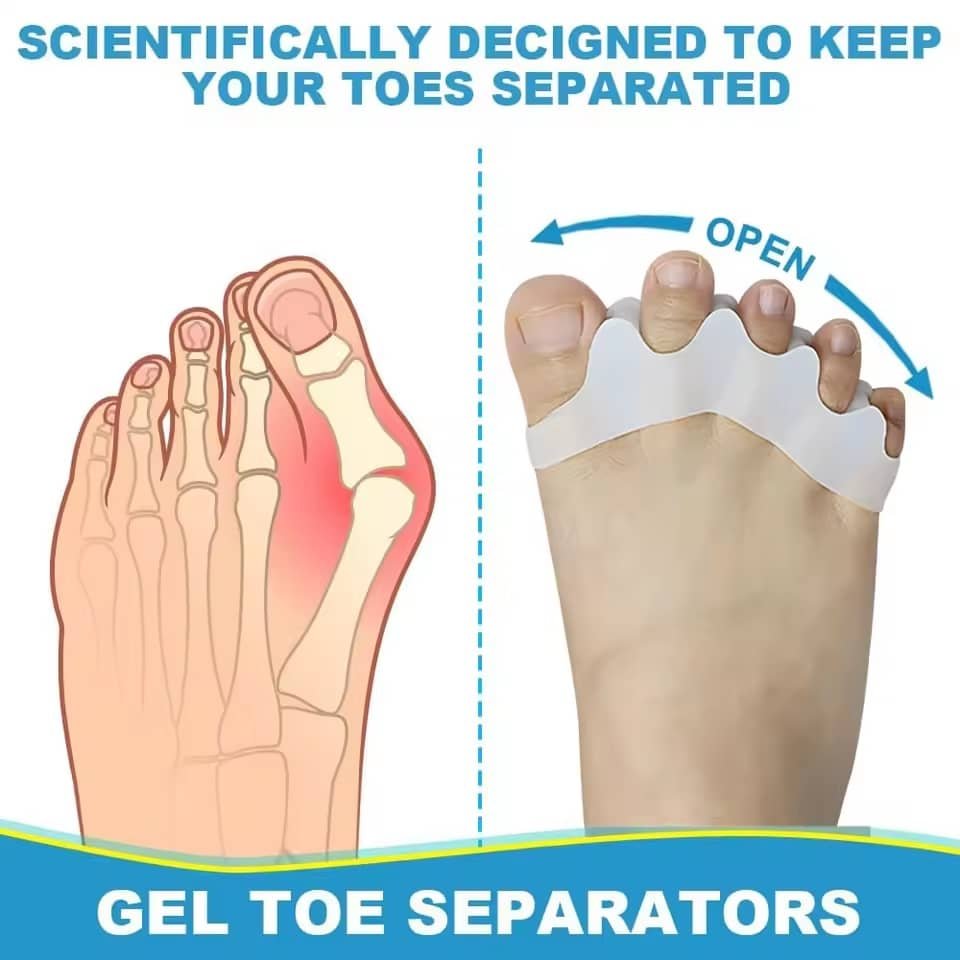
Silicone Toe Spreaders Dividers for Overlapping Toes
This comprehensive guide explores the most effective natural strategies to encourage toe alignment, restore foot health, and regain pain-free movement.
Understanding the Cause: Why Do Toes Become Crooked?
Before seeking solutions, it’s crucial to understand the root causes. Toe deformities are rarely just genetic; they are often a symptom of dysfunctional foot mechanics exacerbated by external factors.
Poor Footwear: The primary culprit is chronic use of narrow, tight, or high-heeled shoes. These shoes force the toes into a compressed position, gradually shortening muscles and tendons until they adapt to the new, crooked alignment.
Muscle Imbalance: Often, the long muscles that flex and extend the toes overpower the smaller, intrinsic muscles within the foot that are responsible for stabilizing and straightening the toes. This imbalance pulls the toes into a bent position.
Trauma: An injury to the foot or toe can damage tendons, ligaments, or nerves, leading to an imbalance that causes a toe to curl or overlap.
Other Conditions: Arthritis, diabetes, and neurological conditions can also contribute to muscle weakness and deformities.
Natural straightening focuses on reversing these causes by addressing muscle imbalances, stretching tight tissues, and providing the right environment for the toes to heal.
The Three Pillars of Natural Toe Straightening
A successful natural approach rests on three pillars: releasing constriction, actively strengthening and stretching, and providing passive correction.
Pillar 1: Create the Right Environment (The Foundation)
You cannot straighten toes while continuing to crush them daily. This is the most critical step.
Footwear Revolution: Immediately transition to shoes with a wide, foot-shaped toe box. Your toes should be able to wiggle, spread, and lie completely flat without touching the sides of the shoe. Avoid high heels, which force body weight forward and crush the toes. Opt for zero-drop or minimal-drop shoes that keep your feet level.
Go Barefoot: Safely spend more time barefoot on varied, natural surfaces like grass, sand, or carpet. This allows your feet to move as nature intended, stimulating sensory feedback and strengthening muscles.
Pillar 2: Active Care (Strengthening and Stretching)
This pillar involves daily exercises to correct muscle imbalances and regain control of your toe movements.
Toe Spreading and Doming:
Spreading: Sit barefoot and practice spreading all your toes apart as wide as you can, without curling them. Hold for 5-10 seconds and repeat 10-15 times. This activates the interosseous muscles between the metatarsal bones.
Doming (Short Foot Exercise): While seated, keep your toes long and flat on the floor. Without curling them, try to draw the ball of your foot back toward your heel, creating a “dome” or arch. This is a subtle but powerful movement for strengthening the arch stabilizers. Hold for 5 seconds. Repeat 10-15 times.
Towel Scrunches and Marble Pickups:
Place a small towel on the floor. Use your toes to scrunch it toward you, then push it away. This builds flexor strength and control.
Place 10-20 marbles on the floor and use your toes to pick them up one by one and drop them into a cup. This excellent exercise improves dexterity and strength.
Manual Stretching and Mobilization:
Gently grasp a bent toe and slowly pull it straight, holding the stretch for 15-30 seconds. Do not force it to the point of pain.
Massage the entire bottom of your foot, particularly the plantar fascia, using your thumbs or a tennis ball. This releases tension in the tight tissues that contribute to toe curling.
Pillar 3: Passive Correction and Support
While active exercises retrain the muscles, passive tools can help hold the toes in a better alignment, especially during rest.
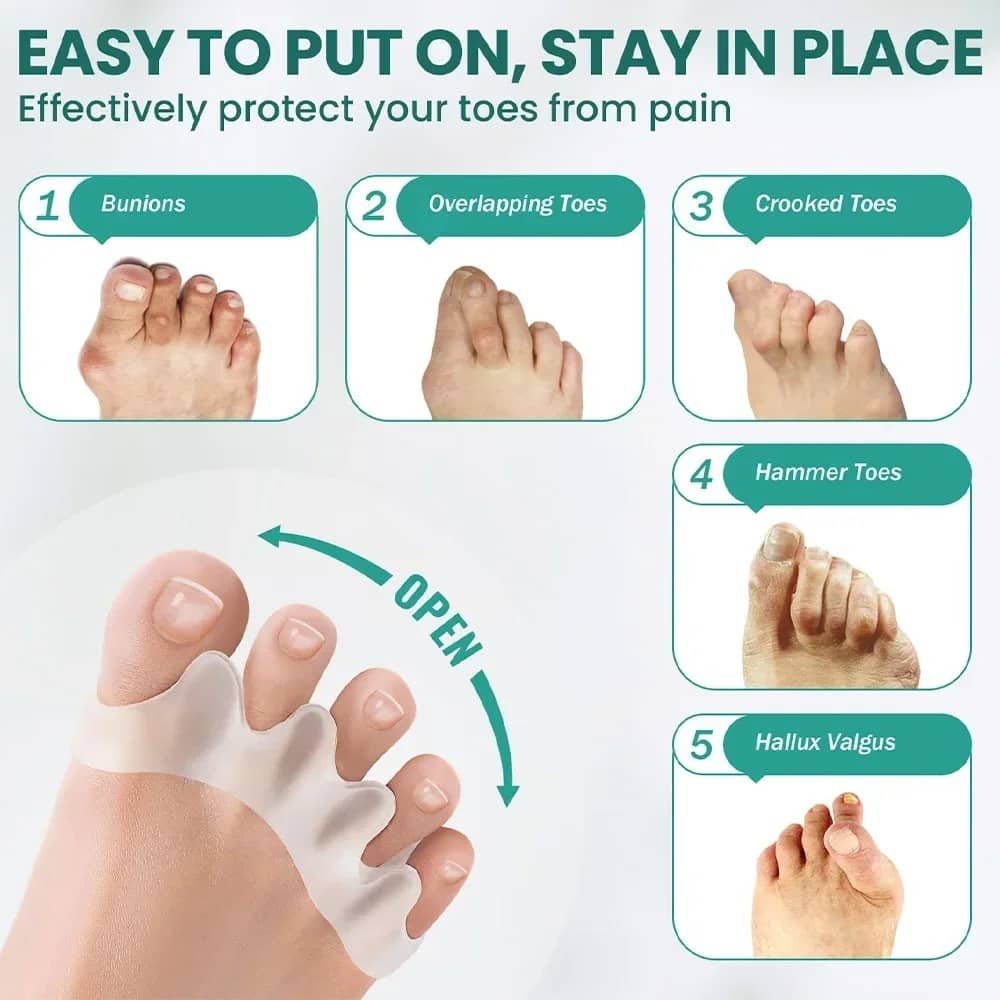
Toe Spreaders and Separators: Products like silicone toe spreaders are invaluable. Worn for an hour or two each day while relaxing, they provide a gentle, constant stretch to the soft tissues and ligaments, encouraging the toes to return to a straighter position. They are particularly useful for combating the effects of a day spent in less-than-ideal footwear.
Targeted Devices: For specific issues like toe dividers for overlapping toes, there are designs that sit specifically between the big and second toe (common for bunion-related overlapping) or between the smaller toes. These silicone toe spreaders apply targeted pressure to correct the overlap gradually.
Taping: Athletic tape can be used to gently splint a bent toe to its neighbor, holding it in a straighter position. This can be worn for a few hours at a time or during exercise. (Consult online guides for proper taping techniques to avoid restricting circulation).
A Sample Daily Routine for Natural Toe Straightening
Morning (2-5 minutes): Before getting out of bed, perform 10 rounds of toe spreading and 10 towel scrunches.
Daytime: Wear foot-shaped shoes. During a break at work or while at home, take off your shoes and roll the bottom of your foot on a frozen water bottle or tennis ball for 2 minutes per foot.
Evening (10-15 minutes): After a shower when muscles are warm, perform your full exercise routine: toe spreads, doming, marble pickups, and manual stretches.
Night: While watching TV or reading, wear your silicone toe spreaders for 60-90 minutes. For overlapping toes, ensure you are using the appropriate toe dividers for overlapping toes.
Patience and Persistence: Setting Realistic Expectations
Natural toe straightening is not a quick fix. It is a process of rehabilitation that can take months, or even years, of consistent effort. The longer the deformity has been present, the longer and more challenging the road to correction will be.
Listen to Your Body: Never push through sharp pain. Discomfort from stretching is normal, but pain is a signal to stop.
Consistency is Key: Five minutes of daily exercise is far more effective than an hour once a week.
When to See a Professional: If you experience severe pain, have a rigid deformity (the toe cannot be manually straightened), or have conditions like diabetes or neuropathy, consult a podiatrist or physical therapist before beginning any new regimen. They can provide a diagnosis and a personalized plan, which may include custom orthotics or physical therapy.
Conclusion: Reclaiming Your Natural Foundation
Straightening your toes naturally is an empowering journey of taking control of your foot health. By ditching restrictive footwear, diligently performing corrective exercises, and using supportive tools like silicone toe spreaders and toe dividers for overlapping toes, you can create an environment where your feet can heal and return to their natural, functional alignment. This commitment not only alleviates pain and discomfort but also enhances your overall stability, balance, and mobility, forming a stronger foundation for every step you take.