How to Stop Big Toes From Curling Up

A curled-up big toe, a condition that can manifest as a subtle lift from the ground or a more pronounced claw-like posture, is more than just a cosmetic concern. Medically referred to as hallux hammertoe or claw toe, this malfunction can lead to pain, difficulty walking, corns and calluses from rubbing against shoes, and even alter your entire gait pattern. The persistent question for those affected is: how can you stop this from happening and restore natural toe alignment?
The good news is that for many people, a curled toe is not a permanent, fixed deformity—at least not in its early stages. It is often a symptom of muscle imbalance, tight footwear, or underlying neurological issues. By addressing the root causes through a consistent and multifaceted natural approach, you can often retrain your toes, relax the muscles, and encourage them to lie flat again. This process requires patience, understanding, and a toolbox of effective strategies.
Understanding the “Why”: The Mechanics of a Curled Toe
To effectively treat a curled toe, you must first understand what causes it. The posture of your toes is a balance of power between two sets of muscles and tendons:
Flexor Muscles: These muscles on the bottom of your foot and calf are responsible for curling your toes downward (gripping).
Extensor Muscles: These muscles on the top of your foot are responsible for lifting your toes upward.

A curled toe occurs when this balance is disrupted. Typically, the flexor muscles become overly tight and dominant, while the extensor muscles become weak and unable to counteract the pull. This imbalance forces the toe into a bent position. Common causes include:
Ill-Fitting Footwear: The most common culprit. Shoes that are too short, too narrow, or have high heels force your toes into a cramped, curled position for hours on end. Over time, the muscles and tendons adapt to and become stuck in this shortened state.
Muscle and Nerve Conditions: Conditions like diabetes, arthritis, stroke, or other neurological issues can damage nerves (neuropathy) or affect muscle control, leading to imbalances that cause toe curling.
Trauma: An injury to the foot or toe can damage tendons or cause scar tissue that alters the toe’s alignment.
High Arches (Pes Cavus): A high, rigid arch can put excessive pull on the tendons, leading to toe clawing.
Your Action Plan: Strategies to Flatten Your Big Toe
Stopping the curl and encouraging straightening is a proactive process. Here is your comprehensive plan.
1. Footwear Reformation: The Non-Negotiable First Step
You cannot solve a problem caused by shoes while continuing to wear the same shoes. This is the most critical change.
Toe Box is King: Immediately switch to shoes with a wide, deep, and rounded toe box. Your toes should be able to lie completely flat and spread out naturally with zero pressure from any side or the top of the shoe.
Heel Height: Avoid high heels, which shift your weight forward and jam your toes into the front of the shoe.
Flexible Soles: Choose shoes with a flexible sole that bends easily at the ball of the foot, allowing your natural foot mechanics to work.
2. Harness the Power of Toe Devices: Spacers and Stretchers
These tools are essential for providing passive correction and stretching. While the terms are often used interchangeably, they have distinct roles in addressing a curled toe.
Toe Spacers for Bunions: Made from soft silicone or gel, these are fantastic for addressing the adduction part of the problem (the big toe drifting inward). By creating a physical barrier between the big toe and the second toe, they help realign the entire forefoot. This improved alignment can reduce the compensatory gripping and curling that often accompanies bunions. Wearing them inside your wide shoes during the day maintains this healthy spacing.
Big Toe Stretcher: This is your primary weapon against the flexion (curling) itself. A big toe stretcher is a device specifically designed to cradle the big toe and apply a gentle, sustained stretch to the bottom of the joint (the plantar fascia and flexor tendons). Regular use helps lengthen these tight tissues, gradually coaxing the toe back toward a flat position. Use it for 15-20 minutes daily while relaxing.
3. Active Exercises: Retrain Your Muscles
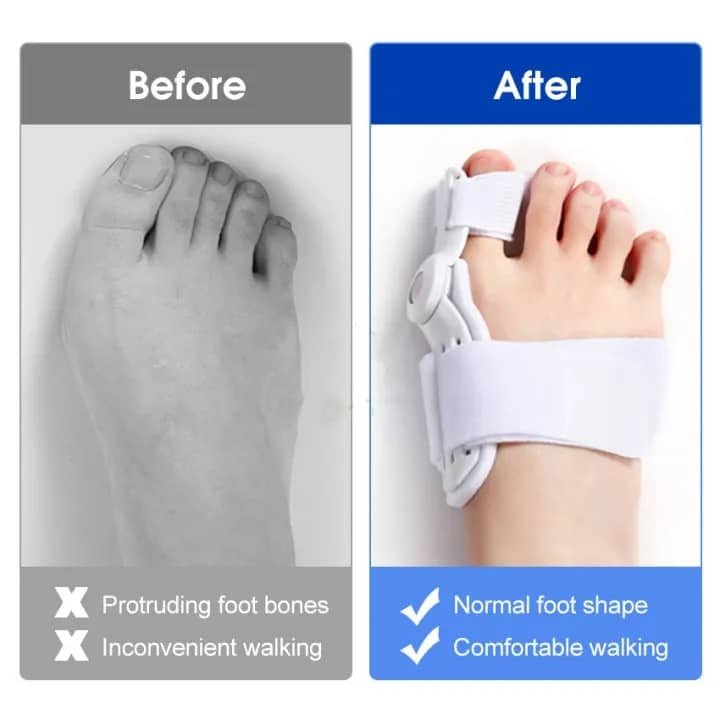
Toe Spacers for Bunions, Big Toe Stretcher 7
Passive stretching must be combined with active strengthening to re-educate the muscles.
Towel Scrunches: Place a small towel on the floor and use your toes to scrunch it toward you, then push it away. This strengthens the intrinsic foot muscles.
Toe Extensions (“DOM” Exercise): Plant your foot flat on the floor. Keep your four smaller toes down, and only lift your big toe upward as high as you can. Hold for 5 seconds. Then, plant the big toe down and lift only the other four toes. This isolates and strengthens the weak extensor muscles.
Marble Pickups: Use your toes to pick up marbles or small balls from the floor and drop them into a cup. This builds dexterity and strength.
Manual Stretching: Gently grasp your curled big toe, pull it upward and outward into a straightened position, and hold the stretch for 30 seconds. Repeat several times a day.
4. Go Barefoot and Massage
Barefoot Time: Safely walking on varied natural surfaces (like grass or sand) allows your foot to function as nature intended, strengthening stabilizing muscles and encouraging toe splay.
Massage: Regularly massage the arch of your foot and the sole beneath your big toe joint. This helps break up adhesions, improve circulation, and relax the tight flexor tendons that are pulling the toe into a curl.
When to Seek Professional Help
While these natural methods are powerful, there are times when professional intervention is necessary. Consult a podiatrist or physical therapist if:
The toe joint becomes rigid and you cannot manually straighten it.
You experience severe pain, numbness, or signs of ulceration (especially if you have diabetes).
The curling is a result of a known neurological condition.
Your self-care efforts aren’t yielding improvement after several consistent months.
A professional can provide advanced treatments like custom orthotics to correct biomechanical issues, more targeted physical therapy, or, in severe fixed cases, discuss surgical options to release or lengthen the tendons.
Conclusion: Consistency is Key
Stopping your big toe from curling up is a journey of retraining and rehabilitating your feet. It is a battle against the forces of habit, tight footwear, and muscle memory. There is no overnight miracle cure. Success lies in the daily, consistent application of the entire plan: liberating your feet in proper footwear, using toe spacers for bunions to maintain alignment, diligently applying a big toe stretcher to lengthen tight tissues, and performing exercises to rebuild strength. By committing to this holistic approach, you empower yourself to correct the imbalance, alleviate pain, and guide your toes back to their natural, healthy, flat position.