
Are Vibrating Foot Massagers Good for You?

The hum of a vibrating foot massager has become a familiar sound in many households seeking relief from the stresses of modern life. As consumers navigate the growing wellness market, understanding the actual benefits and potential drawbacks of these devices—and how they compare to other technologies like EMS foot massager units, EMS foot massager pad accessories, and comprehensive EMS massage mat systems—becomes essential. This comprehensive analysis examines the scientific evidence behind vibrating foot massagers, their physiological effects, and practical considerations for safe and effective use.
Understanding Vibrating Foot Massager Technology
Vibrating massagers operate on fundamentally different principles than Electrical Muscle Stimulation (EMS) devices. While EMS technology uses electrical impulses to trigger involuntary muscle contractions, vibrating massagers rely on mechanical oscillation to produce their effects.
How Vibrating Massagers Work
Mechanical Oscillation: Motors generate rapid back-and-forth movement
Frequency Variations: Typically operate between 20-50 Hz frequencies
Amplitude Differences: Range from gentle buzzing to powerful shaking
Surface Application: Work on skin and superficial tissues rather than directly stimulating nerves
Comparison with EMS Technology
EMS Devices: Cause actual muscle contractions through electrical stimulation
Vibrating Massagers: Provide passive movement without muscle activation
Different Mechanisms: Each technology offers distinct benefits and limitations
Potential Benefits of Vibrating Foot Massagers
Improved Circulation
Vibrating massagers may enhance blood flow through several mechanisms:
Mechanical Pumping Action: Rhythmic compression helps move blood through veins
Vasodilation: Vibration may temporarily expand blood vessels
Increased Capillary perfusion: Enhanced delivery to small blood vessels
Lymphatic Stimulation: Gentle vibration supports waste removal
Research in the Journal of Physical Therapy Science found that foot vibration therapy significantly improved peripheral circulation in study participants, though effects were temporary.
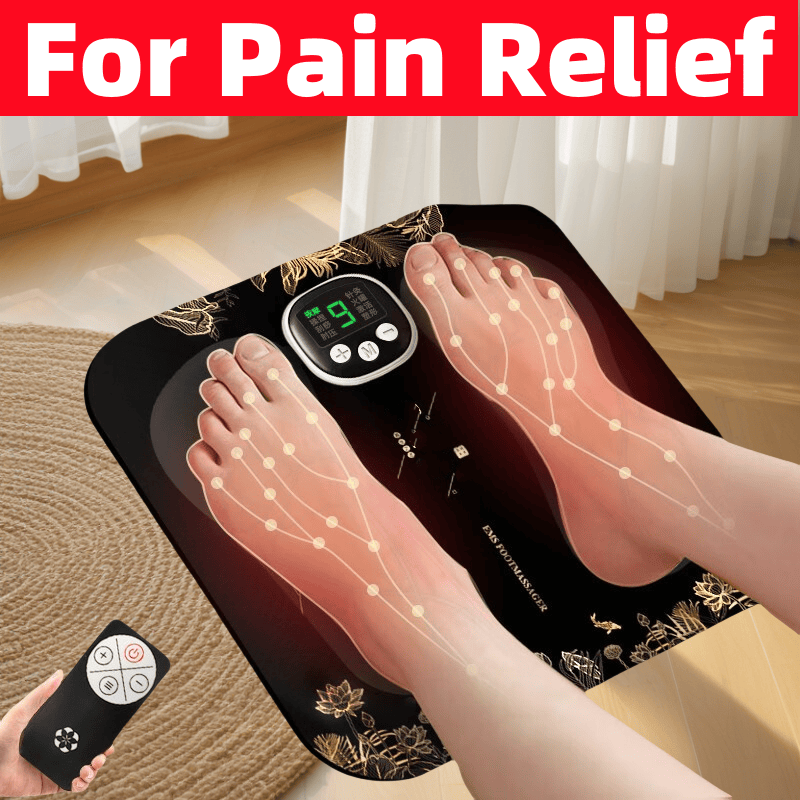
EMS Foot Massager Pad Price, Muscle Stimulator Mat
Muscle Relaxation and Tension Relief
The oscillating motion provides several therapeutic benefits:
Reduced Muscle Stiffness: Vibration helps decrease muscle viscosity
Decreased Muscle Spasms: Gentle shaking can interrupt spasm cycles
Improved Flexibility: Temporary range of motion increases
Pain Gate Mechanism: Vibration may interfere with pain signal transmission
A study published in Clinical Rehabilitation demonstrated that vibration therapy reduced muscle tone and spasticity in patients with neurological conditions.
Neuropathic Symptom Management
For certain types of nerve-related discomfort:
Tingling Reduction: Vibration may distract from neuropathic sensations
Temporary Pain Relief: Through neurological interference mechanisms
Sensory Re-education: For some peripheral nerve issues
Improved Sleep: When used before bedtime for relaxation
Psychological Benefits
The relaxation response offers mental health advantages:
Stress Reduction: Through parasympathetic nervous system activation
Anxiety Decrease: The rhythmic nature can be calming
Mood Improvement: Possible endorphin release from pleasant sensation
Sleep Quality Enhancement: When used as part of bedtime routine
Limitations and Potential Drawbacks
Superficial Effects
Compared to EMS technology, vibrating massagers have limitations:
Limited Depth Penetration: Primarily affect surface tissues
No Muscle Strengthening: Unlike EMS, doesn’t build muscle tissue
Temporary Benefits: Effects typically short-lived after use stops
Adaptation: Users may become accustomed to vibrations over time
Safety Concerns and Contraindications
Absolute Contraindications
Pregnancy: Particularly during first trimester
Deep Vein Thrombosis: Risk of dislodging blood clots
Active Cancer: In treatment areas or with bone metastases
Recent Surgery: Or acute injuries in treatment area
Relative Contraindications
Peripheral Neuropathy: Reduced sensation increases injury risk
Osteoporosis: In elderly populations
Arthritis: During inflammatory flare-ups
Cardiac Conditions: Including pacemakers or arrhythmias
Quality and Design Variations
Market variability presents challenges:
Intensity Control: Some models lack precise settings
Build Quality: Inexpensive models may have uneven vibration patterns
Durability Issues: Motor lifespan varies significantly between brands
Safety Features: Not all models include automatic shut-off timers
Comparative Analysis: Vibrating vs. EMS Massagers
Mechanism of Action Differences
Vibrating Massagers: Passive stimulation through mechanical oscillation
EMS Devices: Active muscle contraction through electrical stimulation
Combination Units: Some advanced models incorporate both technologies
Effectiveness for Specific Conditions
Vibrating Massagers Excel For:
Surface tension relief
Immediate relaxation
Circulation enhancement
Temporary pain distraction
EMS Technology Better For:
Muscle re-education
Strength maintenance
Deep tissue stimulation
Longer-lasting effects
User Experience Variations
Sensation: Vibration feels like buzzing; EMS creates tingling/contractions
Convenience: Vibrating models often simpler to operate
Adaptation: Both technologies may require intensity increases over time
Portability: Vibrating units typically more compact
Practical Usage Guidelines
Optimal Session Parameters
Based on current research and clinical experience:
Duration: 15-20 minutes per session
Frequency: 3-5 times weekly for maintenance
Intensity: Comfortable level without pain
Timing: Evening use for relaxation; morning for circulation
Progressive Usage Approach
Week 1-2: Acclimation Phase
10-minute sessions at low intensity
Every other day frequency
Focus on comfort assessment
Week 3-4: Building Phase
15-minute sessions at moderate intensity
4-5 times weekly
Monitor responses carefully
Week 5+: Maintenance Phase
15-20 minutes as needed
Regular but not necessarily daily use
Intensity based on comfort
Safety Protocols
Essential precautions for all users:
Medical consultation with pre-existing conditions
Skin inspection before each use
Gradual intensity increase
Immediate discontinuation if pain occurs
Regular device maintenance and inspection
Special Population Considerations
Older Adults
Additional precautions necessary:
Reduced intensity due to thinner skin and tissue changes
Shorter sessions (10-15 minutes maximum)
More frequent breaks between uses
Close monitoring for skin reactions
Diabetic Individuals
Specific concerns to address:
Medical clearance essential due to circulation issues
Reduced sensation requires careful intensity monitoring
Frequent foot inspections for any damage
Avoidance during blood sugar instability
Athletes and Active Individuals
Performance and recovery considerations:
Pre-activity: Light vibration for warm-up (5-10 minutes)
Post-activity: Moderate vibration for recovery (15-20 minutes)
Between events: Caution to avoid overuse
Combination approach: With stretching and other recovery modalities
Maximizing Benefits While Minimizing Risks
Complementary Practices
Enhance results through integration with:
Proper hydration to support circulation
Regular stretching for flexibility maintenance
Appropriate footwear selection
Overall fitness routine balance
Usage Timing Strategies
Optimize benefits through strategic timing:
Evening use: For relaxation and sleep preparation
Post-activity: For recovery enhancement
Work breaks: For circulation maintenance during sedentary periods
As needed: For symptom-specific relief
Device Selection Criteria
Choose appropriate models based on:
Quality certifications and safety standards
Adjustability of intensity and patterns
Durability and warranty coverage
User reviews and professional recommendations
Evidence-Based Recommendations
Supported by Research
Conditions with scientific support:
Muscle stiffness and tension reduction
Temporary circulation improvement
Relaxation response activation
Quality of life enhancement for some chronic conditions
Limited Evidence
Areas requiring more research:
Long-term benefits beyond immediate effects
Comparative effectiveness versus other modalities
Optimal parameters for different conditions
Preventative benefits for foot health
Professional Guidelines
Consensus recommendations:
Conservative initial use with gradual progression
Individualized approach based on specific needs
Integrated care rather than standalone treatment
Regular reassessment of benefits versus risks
Conclusion: A Balanced Perspective on Value and Safety
Vibrating foot massagers can indeed be good for you when used appropriately, but they are not a one-size-fits-all solution nor a miracle cure. The benefits—primarily circulation improvement, muscle relaxation, temporary pain relief, and psychological relaxation—are generally supported by research, though mostly for short-term effects.
However, these devices have limitations compared to more advanced technologies like EMS foot massager systems or comprehensive EMS massage mat setups. While vibrating massagers excel at surface-level relaxation and immediate symptom relief, EMS technology offers more profound muscle stimulation and potential long-term benefits for specific conditions.
The key to maximizing benefits while minimizing risks lies in:
Appropriate device selection based on individual needs
Careful attention to contraindications and safety precautions
Realistic expectations about outcomes and limitations
Consistent but moderate usage within recommended parameters
Integration with comprehensive foot care and overall health practices
For most users, vibrating foot massagers represent a valuable addition to self-care routines rather than a complete solution. When used wisely and consistently, they can contribute meaningfully to foot health, relaxation, and overall wellbeing. However, they should complement rather than replace professional medical care, particularly for individuals with specific health conditions or persistent symptoms.
As with any wellness device, the most effective approach involves education, moderation, and attention to individual responses. By understanding both the capabilities and limitations of vibrating foot massagers, consumers can make informed decisions that support their health goals while avoiding potential pitfalls.
Related topics:
Beyond the Bonus: Cultivating Culture with Thoughtful Corporate Gifts for Employees
https://timebusinessnews.com/beyond-the-paycheck-unpacking-the-anatomy-of-a-truly-meaningful-employee-reward/
How to Personalize Your Tungsten Ring: Inlays, Finishes, and Designs