
At what age are babies’ ears fully developed?

The development of a baby’s ear is a fascinating process that unfolds in distinct stages, both in the womb and after birth. For parents curious about their newborn’s appearance or concerned about ear shape, understanding this timeline is crucial. So, at what age are a baby’s ears fully developed? The answer has two parts: structural development is complete at birth, but cartilage maturity evolves over the first few months, creating a critical window for non-surgical intervention that every parent should know about.
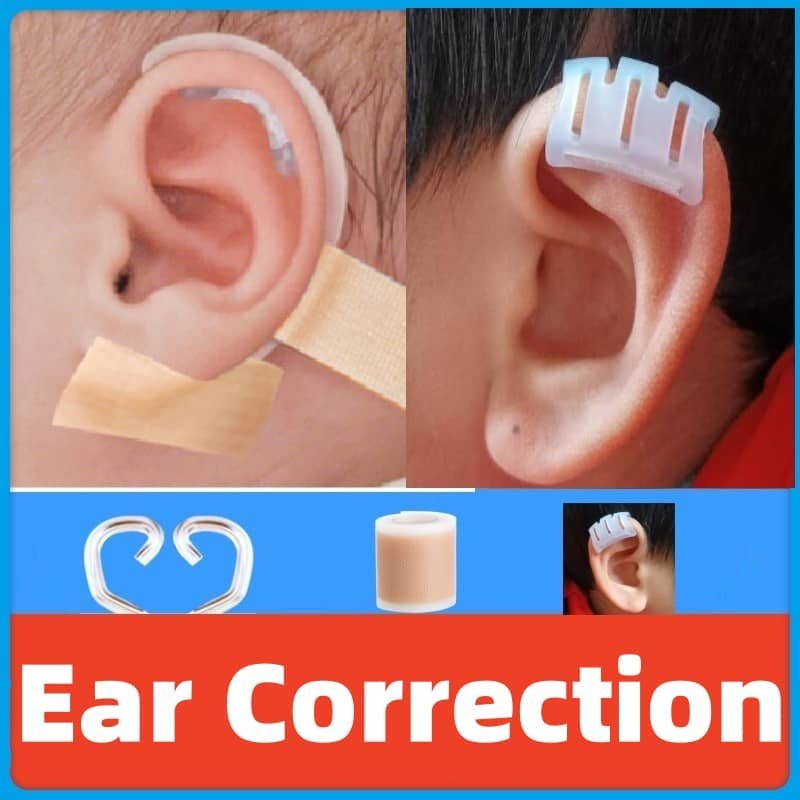
Ear Deformity Corrector Infant, Molding Correction Clip Newborn
Structural Development: Complete at Birth
The intricate architecture of the human ear forms primarily in the first trimester of pregnancy. By the time a baby is born, all the core components of the external ear (auricle)—the helix, anti-helix, concha, and lobe—are fully formed and in place. This means that from a structural standpoint, a newborn’s ears are as “fully developed” as an adult’s in terms of having all the necessary anatomical parts.
However, their appearance at birth may not reflect their final form. It is common for a newborn’s ears to be soft, flexible, and somewhat misshapen due to the pressure of the birth canal or their position in the womb. Many of these minor bends often resolve on their own within the first few days as the ear springs back into its intended shape. But when a more defined infant ear deformity is present—such as a constricted ear, Stahl’s Ear, or prominent ears—it indicates that the fully formed cartilage has set in an abnormal position.
Cartilage Maturity: The “Golden Window” of Plasticity
While the structure is complete at birth, the material itself—the ear cartilage—is not yet mature. This is the most important concept for parents to grasp. Newborns have high levels of maternal estrogen in their system, which makes their cartilage exceptionally soft, malleable, and responsive to external molding forces.
This period of high cartilage plasticity defines the “golden window” for non-surgical correction. This window is most effective from birth until about three months of age, with the absolute optimal time for intervention being the first two to three weeks of life.
During this time, the cartilage is like soft clay; it can be gently guided into a new, permanent shape. This is the scientific basis for infant ear molding, a medical procedure that uses a newborn ear corrector system (like the EarWell® system). This system is not a simple piece of ear corrector tape or a basic ear corrector clip; it is a custom-fitted appliance that uses precisely placed ear corrector stickers, conformers, and retainers to reshape the entire ear architecture.
This process can successfully achieve infant ear correction for a wide range of conditions:
Protruding ear corrector treatment for prominent ears
Cup ear deformity correction
Lop ear deformity correction
Reshaping for Stahl’s Ear and cryptotia
The Closing Window: Cartilage Hardening
As the maternal estrogen clears from the baby’s system over the first three months, the cartilage begins to harden through a process called endochondral ossification. By approximately 3-4 months of age, the cartilage has lost most of its plasticity and has hardened into a more permanent, adult-like state.
At this point, the ear is considered “fully developed” in terms of material maturity. Its shape is now fixed. The golden window has closed. While the ear will, of course, grow larger as the child grows, its fundamental shape—whether normal or misshapen—is now permanent and can no longer be altered by external molding pressure.
This biological timeline explains why consumer-grade products like ear correctors for adults or DIY ear corrector baby kits sold online are scientifically futile for permanent change. These products, often just simple ear corrector clip devices or adhesive strips, cannot apply the precise, comprehensive pressure needed to reshape cartilage. Worse, they can irritate a baby’s skin and, most tragically, waste the precious golden window of opportunity, leading parents to believe they are acting when they are actually using an ineffective solution.
Implications for Parents: Why Timing is Everything
Understanding this developmental timeline has profound implications:
Do Not Adopt a “Wait-and-See” Approach: While some minor bending may resolve, a true deformity will not self-correct. Hoping an ear deformity newborn will “grow out of it” is a gamble that usually fails, as the cartilage sets in its misshapen form.
Act Immediately: If you notice a potential infant ear deformity like a cup ear, lop ear, or significant protruding, consult your pediatrician immediately—ideally within the first week of life. This urgency cannot be overstated.
Seek Professional Treatment, Not DIY: Ask for a referral to a specialist (plastic surgeon or ENT) who offers infant ear molding. This is the only proven, safe, and effective non-surgical method. Avoid online “quick fixes” that are powerless to create permanent change.
For Older Babies and Adults: If your child is past the 3-4 month mark, the only option for permanent change is otoplasty, a surgical procedure performed on older children and adults. It is highly successful but involves surgery and recovery.
Conclusion: Development is a Process
 A baby’s ears are structurally complete at birth, but their final shape is determined by the maturation of cartilage in the first critical months of life. The period of maximum malleability is fleeting, lasting only until about 3 months of age, with the best results seen when treatment begins in the first few weeks.
This knowledge empowers parents to move from uncertainty to action. By recognizing that a baby’s ear is soft and moldable after birth, parents can seek timely, professional intervention for an infant ear corrector system. This proactive approach can permanently correct the ear’s shape without surgery, ensuring the child’s ears are fully developed in both structure and form. For those who miss this window, modern surgery still offers excellent solutions, but the natural, non-invasive opportunity is a gift unique to infancy.