
Can Head Massage Stimulate Hair Growth? The Science Behind the Follicle

The quest for thicker, longer, and healthier hair has led to a booming industry of serums, supplements, and treatments. Amidst these complex solutions, a simple, ancient practice is gaining modern traction: head massage. But can head massage stimulate hair growth, or is it merely a relaxing ritual with placebo benefits? The answer, supported by a growing body of anecdotal evidence and scientific rationale, is a promising yes. While not a magical cure for genetic baldness, consistent and proper scalp massage can create an optimal environment for hair to thrive. And with the advent of specialized tools like a scalp massager for hair growth, this practice has become more effective and accessible than ever.
This article will dissect the biological mechanisms that link massage to hair growth, evaluate the scientific evidence, and provide a practical guide on how to use tools—from a basic silicone scalp massager to an advanced automatic head massager—to maximize your results.
 Part 1: The Foundation of Hair Growth: It Starts at the Follicle
To understand how massage can help, we must first understand the hair growth cycle. Hair grows from follicles, which are tiny organs embedded in the dermal layer of the scalp. Each follicle is a complex mini-organ with its own blood supply, nerve endings, and sebaceous gland.
The health and productivity of a follicle depend on two critical factors:
Adequate Nutrient Delivery: The blood supply delivers the oxygen, vitamins, and minerals essential for the protein synthesis that creates hair.
A Healthy Environment: Follicles can be stifled by a buildup of dead skin cells, excess sebum, and environmental toxins, which can clog them and inhibit growth.
Hair loss or thinning can occur when follicles become dormant (a process called miniaturization) or when their environment is compromised. Massage directly addresses both of these core issues.
Part 2: How Head Massage Stimulates the Scalp for Growth
The physical act of massaging the scalp, whether with fingers or a hair scalp massager, triggers several beneficial physiological responses:
1. Increased Blood Circulation (Vasodilation):
This is the most significant and well-supported mechanism. The pressure applied during a massage causes temporary vasodilation—the widening of blood vessels beneath the skin.
Enhanced Nutrient Delivery: This increased blood flow brings a surge of oxygen and vital nutrients (like iron and vitamins) directly to the hair roots.
Waste Removal: Improved circulation also helps flush out metabolic waste products that can accumulate around the follicles.
Think of it as fertilizing and aerating the soil in a garden. Healthier soil yields healthier plants.
2. Follicle Stimulation and Dermal Papilla Cell Activity:
The gentle stretching of the skin during massage may stimulate the dermal papilla cells at the base of the follicle. These cells are the “command center” responsible for controlling hair growth. Some studies suggest this mechanical stimulation can help awaken follicles in the resting (telogen) phase and push them into the active growth (anagen) phase.
3. Reduction of Stress and Cortisol:
Chronic stress is a well-documented contributor to hair loss conditions like telogen effluvium. Stress elevates cortisol levels, which can disrupt the hair growth cycle and push more hairs into the shedding phase. The act of massage is a proven method to lower cortisol levels and promote relaxation, thereby indirectly creating a more hormonally favorable environment for hair growth.
4. Exfoliation and Unclogging Follicles:
Using a tool like a silicone scalp massager during your wash routine is highly effective for exfoliation. The flexible nodes help to:
Loosen and remove dead skin cells (dandruff) and product buildup.
Prevent follicle clogging, allowing new hairs to surface more easily.
Create a cleaner scalp environment that is less prone to inflammation and issues like folliculitis.
Part 3: The Evidence: What Does the Science Say?
While large-scale clinical trials are still needed, several smaller studies have shown promising results:
A 2016 study published in the journal ePlasty found that standardized scalp massage resulted in increased hair thickness after 24 weeks in a group of men. Researchers hypothesized that mechanical stress induced by stretching stimulated the follicles.
A 2019 Japanese study observed that stretching forces applied to dermal papilla cells in a lab setting upregulated hair-growth-related genes.
The scientific rationale is strong: improved circulation + reduced stress + follicle stimulation = a better environment for hair growth.
Part 4: Choosing Your Tool: Manual vs. Electric Massagers
While finger massages are effective, specialized tools can provide more consistent pressure, deeper exfoliation, and hands-free convenience.
1. Manual Scalp Massagers:
Silicone Scalp Massager / Waterproof Scalp Massager: This is the entry-level champion. Its flexible spikes are perfect for use with shampoo to deeply cleanse and stimulate. Its waterproof nature makes it an ideal, affordable shower tool. It’s excellent for exfoliation and stimulating blood flow.
Mini Head Massager: Made of metal wires, this provides a light, tingling sensation. It’s better for relaxation than for targeted hair growth therapy.
2. Electric and Automatic Massagers:
These devices offer a more intense, consistent, and hands-free experience, making them a popular choice for those seeking the best scalp massager for hair growth.
Vibrating Scalp Massager: Provides high-frequency vibrations to stimulate surface-level blood flow.
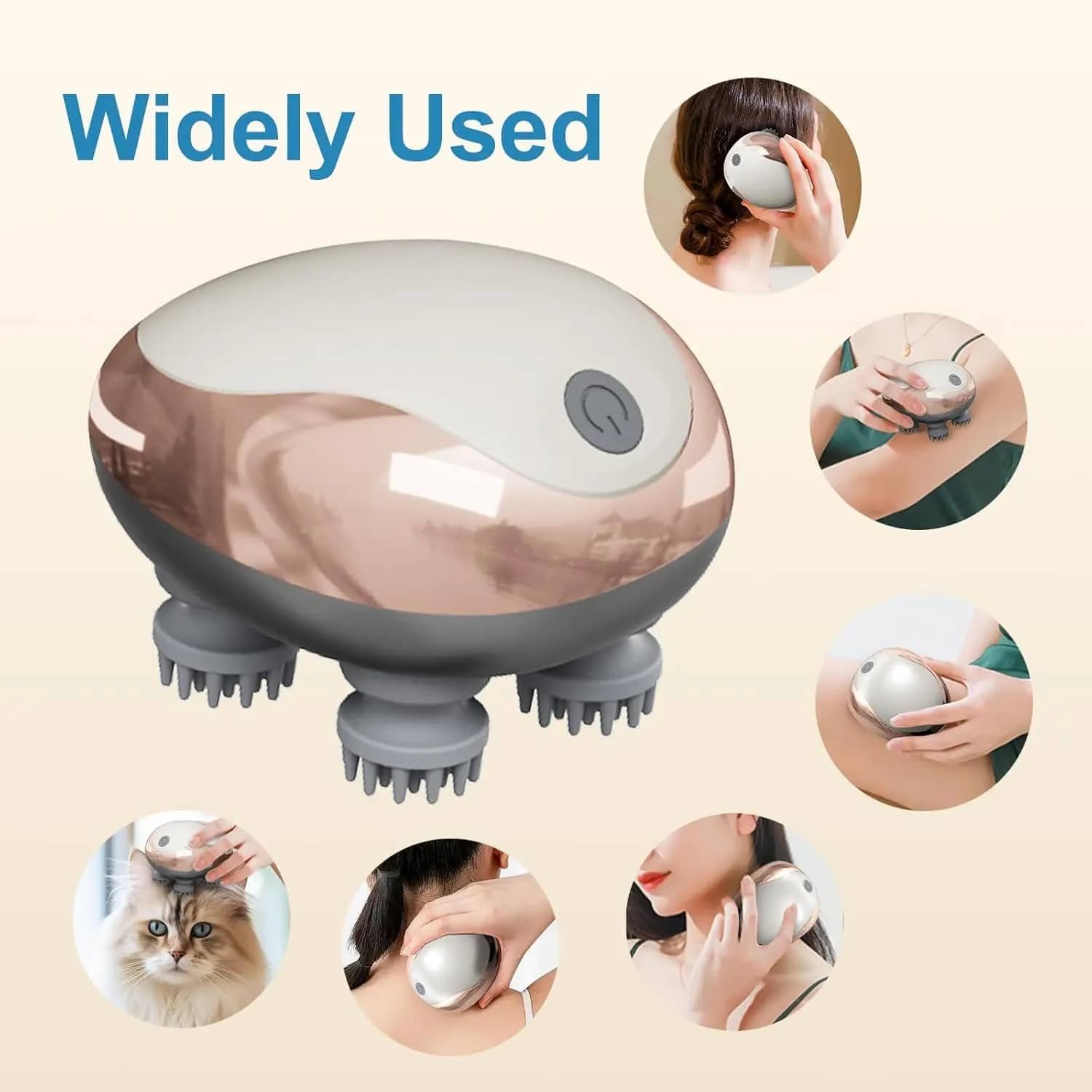
Electric Scalp Massager / Electric Hair Massager / Automatic Scalp Massager: These devices often feature rotating nodes that mimic the kneading motion of human fingers. This provides a deeper, more comprehensive massage, making them a strong contender for the best scalp massager title. An automatic head massager can cover a broader area with consistent pressure.
Head Massage Machine / Electric Head Massager: These are typically larger, cap-style devices that represent the premium end of the market. They often combine multiple features like kneading, vibration, and heat to create a spa-like experience that maximizes stimulation.
Part 5: How to Massage for Hair Growth: A Practical Routine
Consistency and technique are key to seeing potential results.
Be Consistent: Aim for a dedicated massage session for 5-10 minutes, 3-4 times per week.
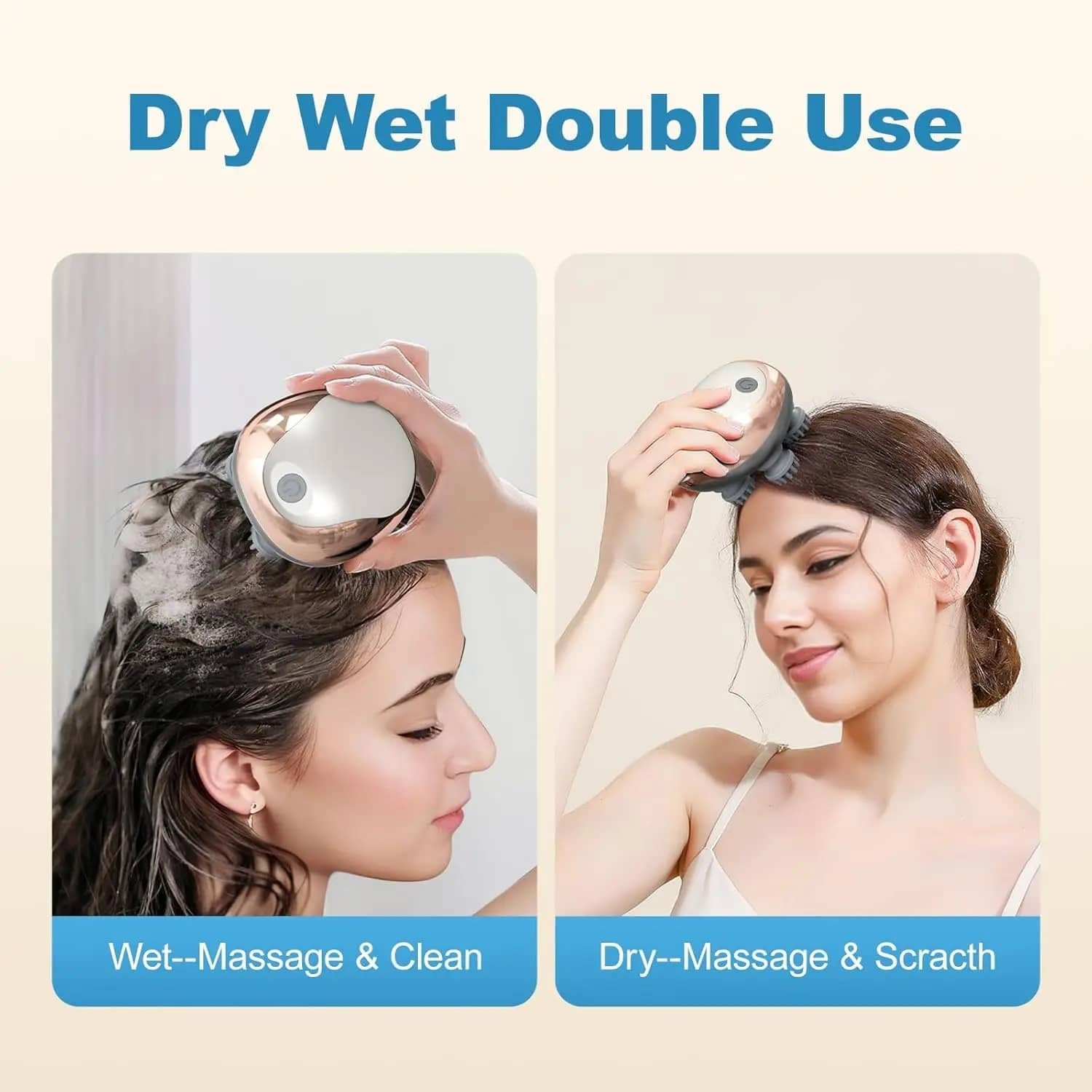
Dry or Wet? Both are effective.
Dry Massage: Use an electric hair massager on a dry scalp to stimulate blood flow before brushing your hair.
Wet Massage (Best for Exfoliation): Use a waterproof scalp massager with your shampoo 2-3 times a week. Apply shampoo, then use the massager in gentle circular motions for 3-5 minutes across your entire scalp before rinsing.
Technique Matters: Use gentle-to-firm pressure. The goal is to stimulate, not abrade. Rough handling can cause breakage and irritation. Use small circular motions, covering your entire scalp.
Patience is Vital: Hair growth is a slow process. Do not expect results overnight. Commit to the practice for at least 3-6 months to assess its effectiveness. Take “before” photos to track progress.
Part 6: Important Caveats and Considerations
It is crucial to maintain realistic expectations. Head massage is a fantastic supportive therapy, but it is not a magic cure.
Genetic Factors: It cannot reverse male or female pattern baldness (androgenetic alopecia) caused by genetic sensitivity to hormones, though it may help support the health of remaining hair.
Underlying Medical Conditions: Hair loss caused by autoimmune diseases, thyroid disorders, or significant nutritional deficiencies requires medical diagnosis and treatment.
Complementary Practice: For the best results, scalp massage should be part of a holistic approach that includes a balanced diet rich in protein and iron, proper hydration, and appropriate medical treatments if necessary.
Conclusion: A Worthy Addition to Your Hair Care Arsenal
 So, can head massage stimulate hair growth? The evidence points to a resounding yes. By boosting circulation, cleansing the scalp, reducing stress, and stimulating follicles, it creates an optimal environment for hair to grow thicker, stronger, and healthier. Whether you choose a simple, affordable silicone scalp massager or invest in a sophisticated automatic head massager, you are making a proactive investment in your hair’s health.
While not a standalone cure for genetic baldness, as a natural, non-invasive, and highly relaxing therapy, it is undoubtedly one of the most beneficial and enjoyable habits you can adopt for your hair and overall well-being. In the journey to better hair, sometimes the simplest, most ancient solutions are the most profound.
Related topics:
The Art of Appreciation: Selecting Meaningful Employee Recognition Gifts