
Can Protruding Ears Be Corrected?

The question of whether protruding ears can be corrected is one that weighs on the minds of many, from new parents examining their newborn to adults who have felt self-conscious for years. The good news is that the answer is a definitive yes. However, the method of correction, its permanence, and its effectiveness depend entirely on two crucial factors: the age of the individual and the type and severity of the ear deformity.
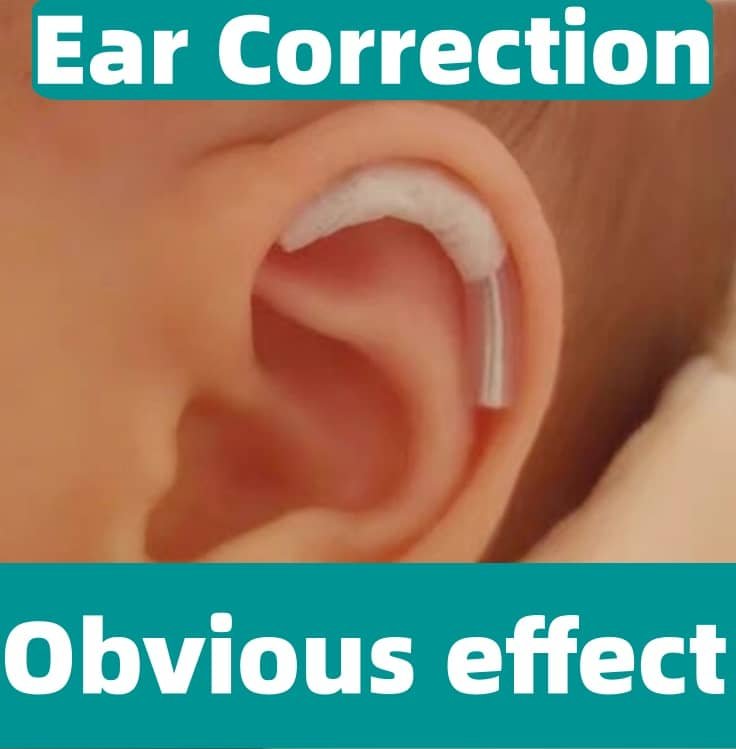
This article provides a comprehensive guide to the world of ear correction, from non-surgical molding for infants to surgical solutions for adults, and examines the role of consumer products like ear corrector tape, ear corrector stickers, and ear corrector clips.
Understanding Ear Deformities: More Than Just Protrusion
While “protruding ears” (also known as prominent ear or Stick Out Ear) are the most common concern, they are just one type of auricular deformity. Correction often depends on accurately identifying the issue. Common deformities include:
Protruding/Prominent Ears: Characterized by a large conchal bowl (the cup-shaped area) or an underdeveloped antihelical fold (the inner Y-shaped ridge), causing the ears to stick out.
Constricted Ear/Cup Ear: A complex deformity where the rim of the ear is tight, giving it a hooded or cup ear appearance. Cup ear correction often requires more intricate work.
Lop Ear: A variation where the top of the ear rim folds down and forward.
Stahl’s Ear: Recognized by an extra horizontal cartilage fold (crus) in the scapha, leading to a pointed or “elfin” appearance.
Cryptotia (“Hidden Ear”): Where the upper part of the ear cartilage is buried beneath the scalp skin.
Earlobe Deformities: Including clefts, duplication, or enlarged lobes.
An ear deformity newborn might present with any of these conditions, often a combination. The approach to infant ear correction for each varies slightly, but the foundational principle remains the same.
The Gold Standard: Correction in Infancy
For newborns, the possibility of a complete, non-surgical correction is not just a hope—it’s a medical reality with an exceptionally high success rate.
Why It Works: The Window of Opportunity
In the first few weeks of life, a baby’s ear cartilage remains exceptionally soft and malleable. This is due to high levels of maternal estrogen still circulating in their system, which allows the cartilage to be reshaped with gentle, consistent pressure. This window is critically short, typically closing between 6 to 8 weeks of age as the estrogen levels drop and the cartilage begins to permanently harden.
The Process: Infant Ear Molding
The non-surgical solution is a technique called infant ear molding or newborn ear correction. A specialist (often a pediatrician, dermatologist, or plastic surgeon) will apply a custom or pre-fabricated ear corrector baby system. This is not a simple piece of tape; it is a sophisticated medical device.
A Newborn ear corrector or Infant ear corrector system typically consists of a soft, malleable wire framework within a silicone shell. It is carefully affixed to the baby’s ear using hypoallergenic adhesive. The device gently and consistently guides the pliable cartilage into the desired shape over 4 to 6 weeks.
This method is highly effective for treating protruding ear, lop ear, cup ear, and even mild cases of Stahl’s Ear and cryptotia. The success rate for infant ear molding is over 90% when treatment begins within the first two weeks of life. For parents concerned about an infant ear deformity, immediate consultation is the key to avoiding surgery later in life.
The Adult Dilemma: The Limits of Non-Surgical “Correctors”
For adults, adolescents, and infants who have missed the molding window, the cartilage is permanent and rigid. It cannot be reshaped by external pressure alone. This is where the market for ear correctors for adults becomes fraught with misleading claims.
Let’s analyze the common non-surgical products marketed to adults:
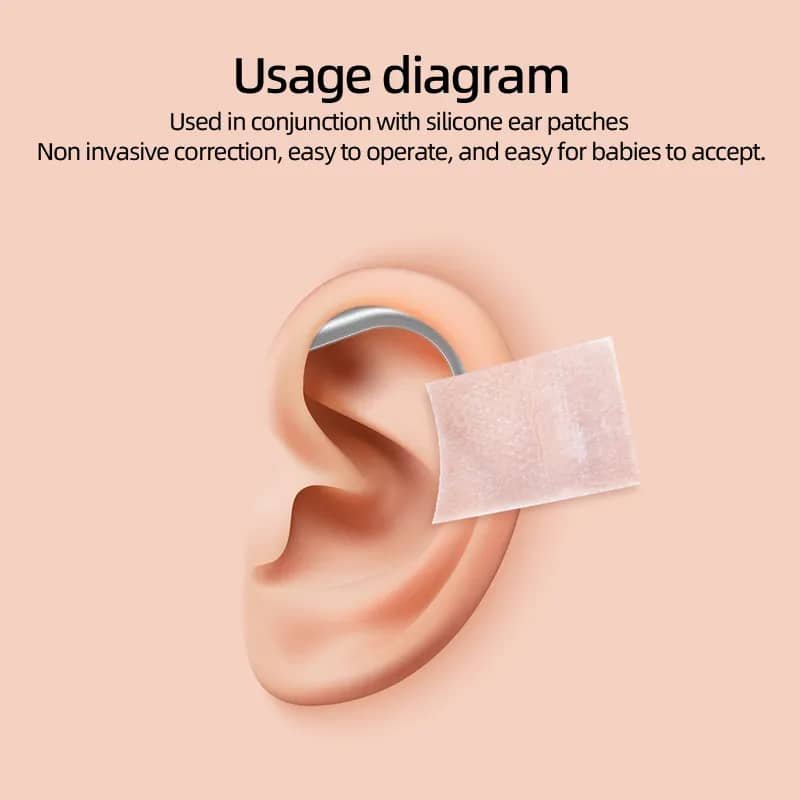
Ear Corrector Tape/Stickers: These adhesive strips (ear corrector stickers) are applied to the back of the ear and attached to the scalp, pulling the ear closer to the head.
Reality: They offer a temporary cosmetic concealment, not correction. The effect vanishes once the tape is removed. They can cause skin irritation, are not waterproof, and do not alter the cartilage’s shape. They are ineffective for complex issues like cup ear deformity correction or lop ear deformity correction.
Ear Corrector Clip: This device clips onto the helix (the outer rim) of the ear to bend it backward.
Reality: Similar to tape, it provides only a temporary visual change. It can be painful, cause pressure sores, and potentially damage the skin and cartilage with prolonged use. It does not provide a permanent solution.
The Verdict on “Ear Correctors”:
For adults, these products are misnamed. They are concealment aids, not corrective devices. No ear corrector tape or ear corrector clip can achieve permanent results on hardened cartilage. Managing expectations is crucial: these products can be used for a special event or photos but are not a substitute for medical correction.
The Permanent Solution for Adults: Otoplasty
For anyone beyond infancy seeking permanent correction, otoplasty (ear pinning surgery) is the only proven and effective method. This outpatient procedure is highly successful and tailored to the specific deformity.
For Protruding Ears: The surgeon makes an incision behind the ear, sculpting the cartilage to create a new antihelical fold and/or reducing the conchal bowl, then sets the ears closer to the head with permanent sutures.
For Complex Deformities: Procedures for Stahl’s Ear, constricted ear, cup ear correction, and lop ear correction involve more intricate cartilage scoring, grafting, and reshaping to reconstruct a natural-looking ear.
Recovery and Results: Recovery involves wearing a protective headband for a period. The results are permanent, with minimal scarring hidden behind the ear.
Conclusion: A Clear Path to Correction
So, can protruding ears be corrected? Absolutely.
The path to correction, however, is clearly defined by age:
For Babies (0-8 weeks): Yes, completely and non-surgically. Infant ear molding with a medical-grade ear corrector baby system is the gold standard. Parents who notice an ear deformity newborn should act swiftly for the best outcome.
For Adults and Older Children: Yes, permanently, but only through surgery. Otoplasty is a safe and definitive solution for protruding ear, cup ear, lop ear, and other deformities. Consumer products like ear corrector tape and clips offer only a temporary, superficial fix.
Understanding this distinction is empowering. Whether for your child or for yourself, effective and lasting solutions exist. The key is to seek professional medical advice to choose the right path forward, ensuring results that are not just cosmetic, but truly corrective.