
How to Massage Head for Headache: A Step-by-Step Guide to Natural Pain Relief

A throbbing headache can derail your entire day, sending you scrambling for the medicine cabinet. But before you reach for painkillers, consider a natural, drug-free alternative: therapeutic head massage. Knowing exactly how to massage head for headache can be a powerful tool for managing tension, the most common type of headache. This skill allows you to target the specific muscles and nerves that cause pain, offering relief and relaxation. Furthermore, the rise of specialized tools, from a simple silicone scalp massager to a sophisticated headache head massager, has made this practice more effective and accessible than ever.
This comprehensive guide will provide a detailed protocol for massaging headache pain away, explain the science behind why it works, and explore how modern devices like an electric head massager can be integrated into your pain-management routine.
 Part 1: Why Massage Works for Headache Relief
Tension headaches are often caused by tightened muscles in the neck, scalp, and jaw. These muscles can contract due to stress, poor posture, dehydration, or eyestrain. This muscle tension can irritate nerves and compress blood vessels, leading to the characteristic dull, aching pain of a headache.
Massage addresses this directly by:
Releasing Muscle Knots: Breaking up adhesions and relaxing contracted muscles in the suboccipital region (base of the skull), temples, and forehead.
Increasing Blood Flow: Improving circulation delivers oxygen and nutrients while flushing out lactic acid and other pain-triggering metabolites.
Stimulating Nerve Pathways: The pressure can stimulate the release of endorphins, the body’s natural painkillers, and may interfere with the pain signals being sent to the brain (the Gate Control Theory of pain).
Reducing Stress: The relaxing effect lowers cortisol levels, which is a key contributor to tension headaches.
Part 2: Preparation for a Headache-Relief Massage
For the Giver (if massaging someone else):
Create a Calm Environment: Dim the lights, reduce noise, and ensure the room is warm.
Have the Recipient Sit Comfortably: Use a chair with good back support. Stand or sit behind them so you have easy access to their head and neck.
Wash and Warm Your Hands: Cold hands can cause tightening instead of relaxation.
For the Receiver (if self-massaging):
Find a Quiet Space: Sit or lie down in a comfortable position where you can easily reach your head and neck.
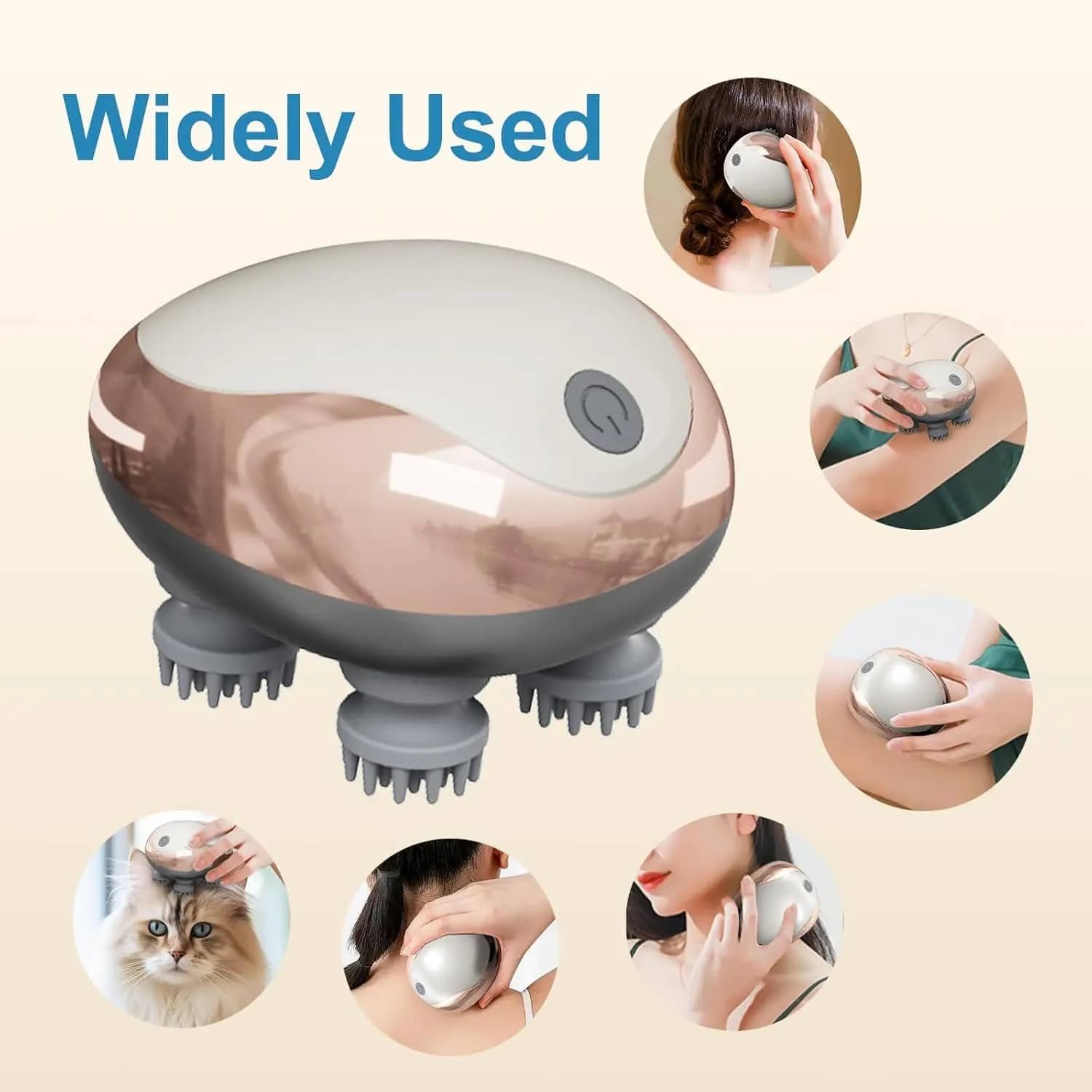
Consider a Tool: Using a vibrating head massager or mini head massager can make self-massage easier on your hands and provide consistent stimulation.
Optional: Use a small amount of natural oil (like peppermint or lavender oil, diluted in a carrier oil) to reduce friction. Peppermint oil, in particular, has a cooling effect that can enhance pain relief.
Part 3: Step-by-Step Technique: How to Massage Head for Headache
 Focus on these key areas where tension collects. Use your fingertips (not nails) and apply firm, steady pressure.
Step 1: The Neck and Base of the Skull (Suboccipital Muscles)
This is arguably the most important area for headache relief.
Position: Have the recipient tilt their head slightly forward.
Action: Place your thumbs at the top of the neck, just below the base of the skull. You should feel a hollow area on either side of the spine.
Technique: Apply upward pressure with your thumbs and make small, circular motions. Hold steady pressure for 30-60 seconds on any particularly tender spots you find. This area is a common source of referral pain to the forehead and temples.
Step 2: The Temples
Action: Use your middle or index fingers to press on the temples (the soft spots on the sides of the head, behind the eyes).
Technique: Apply gentle, steady pressure for 10 seconds, then make small circles for another 30 seconds. This can help relieve pressure around the temporal artery.
Step 3: The Forehead and “Third Eye”
Action: Place your thumbs between the eyebrows, in the center of the forehead.
Technique: Press gently and slide your thumbs outward toward the temples. Repeat this motion several times. Then, use your fingers to make small circles across the entire forehead.
Step 4: The Scalp (Effleurage and Kneading)
Action: Place your fingers on the scalp, as if you are shampooing.
Technique: Using the pads of your fingers, apply enough pressure to move the scalp over the skull. Make small, circular motions across the entire scalp, from the hairline to the crown and down to the base of the skull. This releases tension in the galea aponeurotica, the sheet of tissue connecting forehead and scalp muscles.
Step 5: Traction (Optional)
Action: Gently grasp sections of hair close to the roots.
Technique: Apply a very gentle, steady pull for a few seconds before releasing. This provides a pleasant stretching sensation that can decompress the scalp.
Step 6: Finish with Soothing Strokes
Action: Conclude the session by gently resting your hands on the recipient’s shoulders or head and then lightly stroking from the forehead back to the neck to calm the nervous system.
Part 4: Enhancing Relief with Massage Tools
For targeted, powerful relief, specialized tools can be highly effective. Many are explicitly designed as a head massager for headaches.
Silicone Scalp Massager / Waterproof Scalp Massager: While often marketed as a scalp massager for hair growth, its rigid nodes are perfect for applying targeted pressure to the suboccipital muscles and scalp. Its waterproof nature also means you can use it in a warm shower, where heat can further relax muscles.
Electric Scalp Massager / Vibrating Scalp Massager: The high-frequency vibrations of a vibrating head massager are excellent for providing a distracting sensation that can override pain signals (Gate Control Theory). They are easy to use on yourself for quick relief.
Automatic Head Massager / Head Massage Machine: For a comprehensive head pain massage, these devices offer the most power. A best head massage machine might combine kneading, vibration, and heat therapy to deeply penetrate tense muscles. Look for models specifically noted as a head massager for migraines for the most gentle yet effective settings.
How to Use a Tool:
Start on the lowest setting.
Place the nodes directly on the key tension points: the base of the skull, the temples, and the forehead.
Hold it in place for 30-60 seconds per area, allowing the sensation to penetrate.
Never apply excessive pressure; let the tool do the work.
Part 5: Choosing the Best Tool for Headache Relief
With so many options, from an electric hair massager to a hair scalp massager, focus on devices designed for therapy, not just hair growth.
For Pinpoint Accuracy: A mini head massager with a single node or a silicone scalp massager allows you to target specific trigger points.
For Overall Relaxation: A vibrating scalp massager or larger automatic scalp massager is great for covering broad areas of the scalp.
For the Ultimate Experience: If headaches are a frequent issue, investing in the best head massager that includes heat could provide the most significant and lasting relief.
Conclusion: Empower Yourself with Natural Pain Management
Learning how to massage head for headache is an act of self-empowerment. It provides a natural, immediate, and drug-free strategy to combat one of life’s most common ailments. While the skilled touch of your own hands is profoundly effective, modern tools like a dedicated headache head massager can amplify the benefits, offering deeper stimulation and making self-treatment effortless. By understanding the pressure points and techniques, and potentially integrating a helpful device, you can turn a debilitating headache into a manageable moment of calm, taking control of your well-being one massage at a time.