
How to Protect a Cast While Showering?

For anyone with a limb immobilized in a cast, the simple daily ritual of showering transforms into a complex logistical puzzle. The fear of water seeping into the cast padding is justified; a wet cast can lead to skin irritation, itching, unpleasant odors, and serious infections, potentially compromising the healing process. Fortunately, with careful planning and the right tools, you can confidently keep your cast dry. This comprehensive guide will walk you through the most effective methods, focusing on the gold standard: waterproof cast covers.
Why a Dry Cast is Absolutely Essential
Before delving into the “how,” it’s crucial to understand the “why.” A traditional cast consists of a soft cotton or synthetic padding layer next to your skin, surrounded by a hard plaster or fiberglass shell. This environment is designed to be stable and dry.
When moisture invades this space, several problems arise:
Skin Maceration: The padding acts like a sponge, holding water against your skin for hours. This causes it to become soft, wrinkled, and extremely vulnerable to breakdown, leading to painful sores and ulcers.
Fungal and Bacterial Growth: A damp, dark, warm environment inside a cast is the perfect breeding ground for mold, fungus, and bacteria. This causes severe itching and a distinct, unpleasant odor.
Structural Weakening: A plaster cast can begin to disintegrate when wet, losing its ability to properly immobilize the fracture. Even fiberglass can be compromised if the underlying padding is saturated.
The Itch You Can’t Scratch: Moisture exacerbates itching, and since you can’t scratch inside the cast, this can lead to immense frustration and even accidental skin damage from inserting objects into the cast.
Your doctor’s primary instruction will always be to keep the cast dry. Heeding this advice is non-negotiable for a successful recovery.
The Gold Standard: Dedicated Waterproof Cast Covers
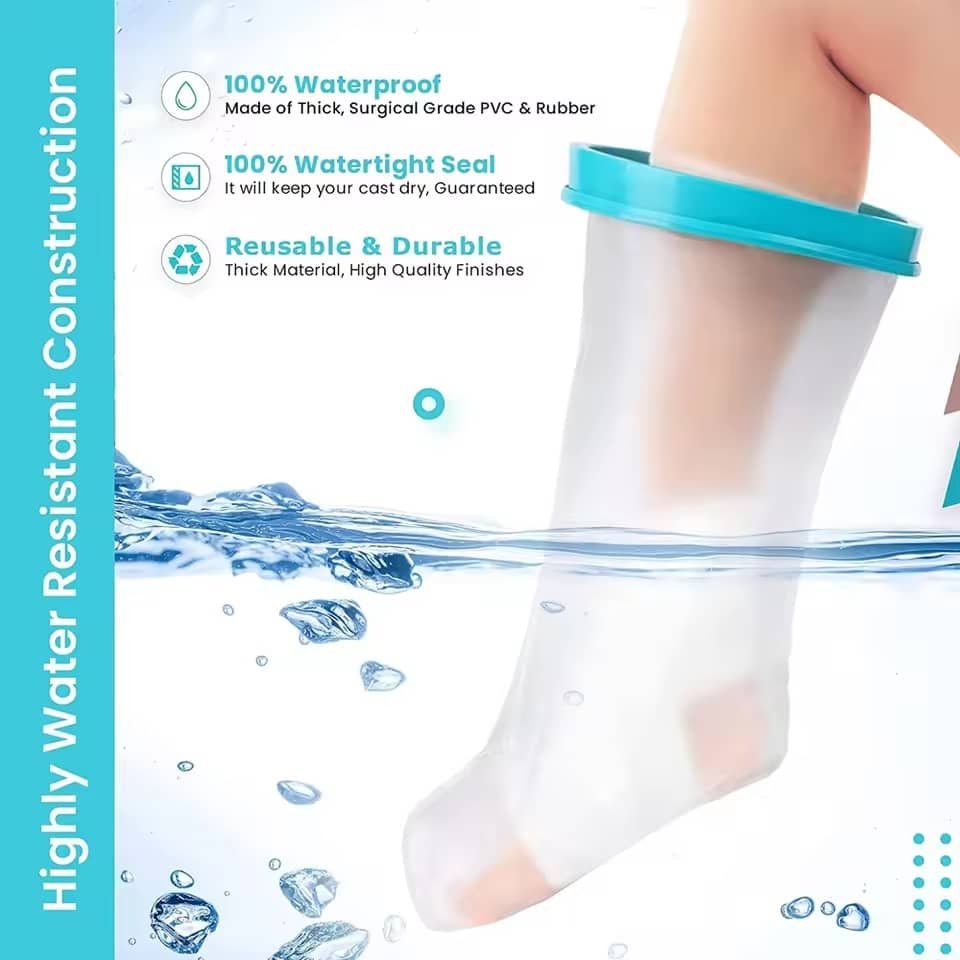
The most reliable and hassle-free method for showering with a cast is to use a purpose-built waterproof leg cover for shower. These devices are engineered specifically to create a fail-safe, watertight barrier, offering unparalleled peace of mind.
How They Work:
A high-quality waterproof leg cast protector is typically a sleeve made from durable, transparent plastic (like TPU or PVC) that features a patented sealing system. One end has a wide, stretchable seal made of medical-grade silicone or soft latex that fits snugly around your thigh or upper calf. The other end is open, allowing you to slide your leg and cast inside. The transparency allows you to visually confirm that no water has breached the seal.
Choosing the Right Cover for Showering:
When selecting a waterproof cover for leg in shower, look for the following features:
A Full-Length Design: Especially for a long leg cast, a full leg shower protector is essential. It must extend from well above the cast down past the toes to ensure complete coverage.
A Comfortable, Wide Seal: The top seal should be wide and made of hypoallergenic silicone. A wider seal distributes pressure more evenly, preventing it from feeling too tight or cutting off circulation. This is what makes a waterproof leg protector comfortable for extended use.
Durable Material: Ensure the plastic is thick enough to resist punctures but flexible enough to move with you. A flimsy plastic cover for leg after surgery might tear easily.
Reusability: A good cover can be used dozens of times, making it a cost-effective solution for a recovery period that can last several weeks.
It is critical to understand that a waterproof leg cover for shower is designed for showering. It is not necessarily rated for the increased pressure of submersion during swimming. For that, you would need a specifically rated waterproof leg cast cover for swimming.
Step-by-Step Guide to Using a Waterproof Cast Cover
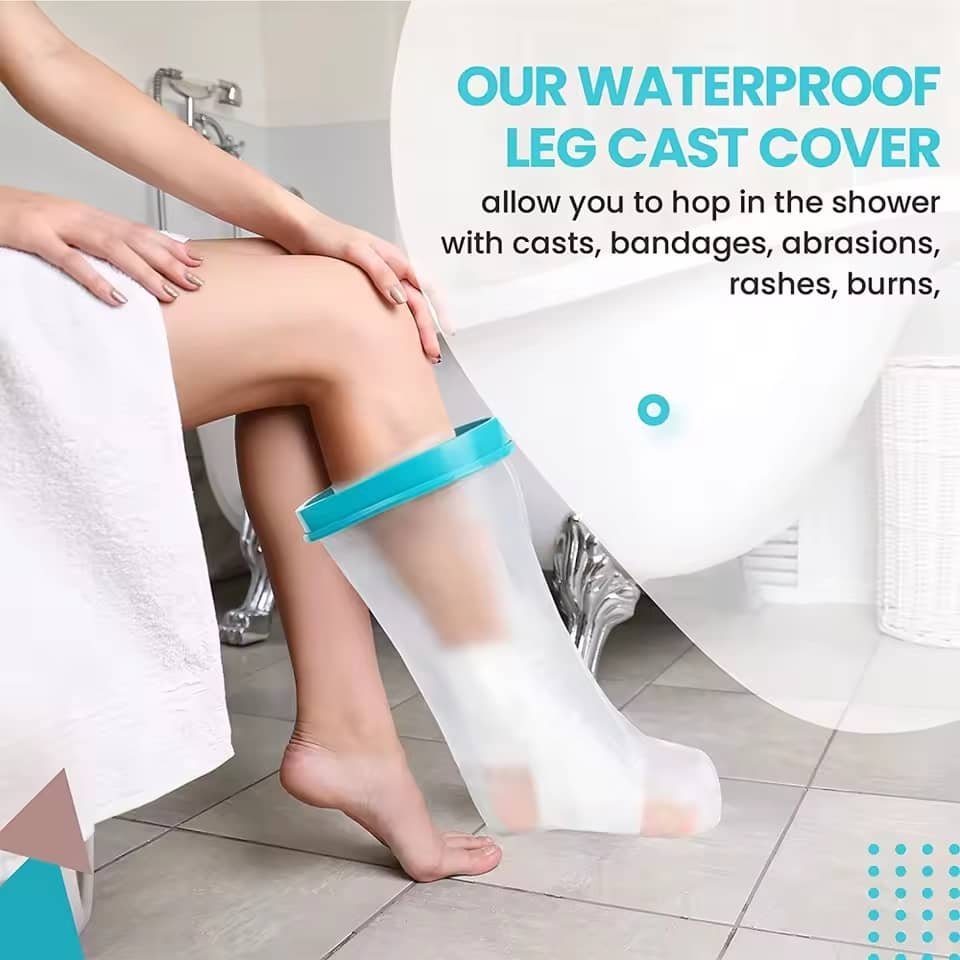 Proper application is the key to staying dry. Follow these steps for using your cast cover for leg:
Prepare Your Skin: The area where the seal will sit must be clean, completely dry, and free of lotions or oils. These can break the seal. If needed, you can use a small amount of talcum powder on the skin to help the seal grip better and absorb any minor moisture.
Prepare the Cover: Turn the waterproof shower leg cover partially inside out, rolling it up from the toe end towards the top seal. This makes it much easier to slide on.
Apply the Cover: Gently slide the rolled cover over your foot and onto the cast. Position the sealed opening high on your thigh (or calf, for a below-knee cast), ensuring it’s on smooth, uniform skin away from the cast’s edge.
Unroll and Secure: Slowly unroll the cover down the length of your cast until it is fully extended. Adjust the top seal so it sits comfortably but snugly. You should be able to fit a finger under the seal, but it should not be so loose that it gaps.
The Final Check: Before entering the shower, do a visual and tactile check. Feel around the seal for any obvious folds or gaps. The transparent material allows you to see that everything is properly positioned.
Shower Mindfully: While the cover is highly effective, avoid directing a high-pressure shower stream directly at the seal for prolonged periods.
Dry Thoroughly Afterward: After showering, carefully remove the cover by rolling the seal down your leg. Immediately dry the outside of the cast and the skin under the seal with a towel. You can also use a hairdryer on the cool setting to blow air into the cast openings to ensure any residual moisture from sweat is evaporated.
Alternative Methods and Their Risks
Before the advent of commercial covers, people relied on DIY methods. While better than nothing, these come with significant risks of failure.
Plastic Bags and Tape: This is the most common makeshift solution. While it may work for a very quick hand wash, it is highly unreliable for a full shower. Tape does not adhere well to wet skin and can lose its stickiness under steam. Plastic bags tear easily and are impossible to seal effectively around the contours of a limb. The tape can also irritate the skin and leave a sticky residue.
Press-and-Seal Plastic Wrap: This can form a better seal than a bag alone and is less likely to use irritating tape. However, it is still prone to tearing and is not designed to handle the direct force of water from a showerhead.
These methods are temporary fixes at best. For daily, reliable protection, a purpose-made waterproof shower leg protectors is a wise and safe investment.
Special Considerations: Kids and Post-Surgery
For Children: A wiggly child in the shower adds a layer of challenge. Using a kids waterproof leg cast covers for swimming (if shower-approved) can be a great option as they are often made with extra-durable materials. The key is to ensure a perfect fit—measure their thigh carefully according to the product’s size chart. Make the process fun and explain the importance of keeping the “special bandage” dry.
After Surgery: A plastic cover for leg after surgery is critical not just for the cast but for protecting stitches, staples, or wound dressings from infection. A waterproof cover for leg wound follows the same principle, creating a sterile, dry barrier that enables patients to maintain hygiene without compromising their recovery.
Conclusion: Shower with Confidence
Protecting a cast in the shower doesn’t have to be a source of anxiety. By investing in a high-quality waterproof cast cover leg and learning how to use it correctly, you can maintain your normal hygiene routine without jeopardizing your recovery. The modest cost of a dedicated waterproof leg cover is insignificant compared to the comfort, convenience, and most importantly, the security it provides in keeping your healing limb completely dry. Remember, a dry cast is a happy cast, and a happy cast leads to a successful recovery.