
How to Waterproof a Wound for a Shower?

Whether you’re recovering from surgery, managing a chronic wound, or healing from an injury, the challenge of showering without compromising your wound is a common and critical concern. Water exposure can disrupt the delicate healing environment, introduce bacteria, and lead to infection, maceration, and delayed recovery. Properly waterproofing your wound is not just about comfort—it’s a essential medical precaution. This comprehensive guide will walk you through the safest and most effective methods to protect your wound during showering, with a special focus on solutions like the waterproof cover for knee after surgery.
 Why Keeping Your Wound Dry Is Non-Negotiable
A healing wound is a vulnerable site where the body is working to repair damaged tissue. Introducing moisture can severely compromise this process. Here’s why:
Risk of Infection: Tap water, while treated, is not sterile. Bacteria and other microorganisms can enter the wound, leading to localized infections like cellulitis or more serious systemic complications.
Maceration: When the skin around a wound becomes oversaturated with water, it softens, turns white, and breaks down—a condition known as maceration. This makes the skin fragile, delays healing, and can even enlarge the wound.
Disruption of the Healing Environment: Many modern wound dressings are designed to maintain a specific moist environment conducive to healing. Soaking this dressing with shower water alters the pH, temperature, and moisture balance, rendering the advanced dressing ineffective.
Suture and Staple Issues: For surgical wounds, moisture can weaken sutures (stitches) and increase the risk of irritation or infection around staple sites.
Your healthcare provider’s instruction to keep the wound dry is the cornerstone of preventing these setbacks. Using a dedicated waterproof knee protector is the most reliable way to adhere to this directive.
The Best Method: Using a Dedicated Waterproof Protector
For optimal protection, a purpose-built medical device is unparalleled. A waterproof knee cover for shower is engineered to create a fail-safe, watertight barrier around the affected area.
How They Work:
These protectors are typically made from clear, durable, medical-grade plastics like TPU or PVC. They feature wide, flexible seals made of hypoallergenic silicone that conform to your leg, creating a gasket that blocks water entry. The transparency allows you to monitor the seal and the wound area throughout your shower.
Choosing the Right Cover:
When selecting a waterproof knee shower protector, consider these features:
Secure Seal: Look for a wide, silicone-based seal. Silicone is gentle on skin, provides a secure fit, and distributes pressure evenly to avoid discomfort or restricted circulation.
Appropriate Size: The cover must be large enough to extend well beyond the wound and any dressing. For a knee wound, this means the seal should sit on the thigh and calf, not near the joint itself.
Durability and Reusability: A high-quality waterproof knee cast protector can be used multiple times, making it a cost-effective solution for a recovery period that may last weeks.
Ease of Use: Designs that can be rolled on are easier to manage independently, especially if you have mobility limitations.
Step-by-Step Guide to Applying a Waterproof Cover
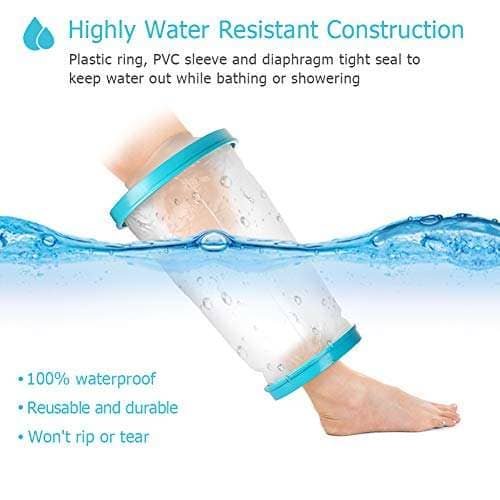 Proper application is key to ensuring complete protection. Follow these steps for using your knee cast cover for shower:
Prepare the Skin: Ensure the area where the seal will sit (on the thigh and calf) is clean, completely dry, and free of lotions, oils, or creams. These can prevent a tight seal. A light dusting of talcum powder can help improve grip on dry skin.
Prepare the Cover: Turn the cover partially inside out by rolling it from the open end towards the seal. This makes it much easier to slide onto your leg without straining.
Apply the Cover: Gently slide the rolled cover over your foot and onto your leg. Carefully position the seals so they sit on smooth, uniform areas of skin well above and below the wound and dressing.
Secure the Seal: Slowly unroll the cover so it sits smoothly over your knee. Adjust the seals to ensure they are snug and comfortable. You should be able to fit a finger under the seal, but it should not be so loose that it gaps.
Pre-Shower Check: Before entering the shower, feel around the seals for any obvious folds or gaps. The transparent material allows you to visually confirm that the wound area is fully covered and the seals are intact.
Shower Mindfully: Use a shower chair for stability and to minimize movement that could disrupt the seal. Avoid directing a high-pressure shower stream directly at the seals for prolonged periods.
Dry Thoroughly Afterward: After showering, carefully pat the outside of the cover dry before removing it. Gently roll or slide the cover off. Immediately dry your skin under the seals with a soft towel. Inspect the wound dressing to ensure it remains completely dry.
Alternative Methods and Their Risks
While DIY methods are sometimes used, they come with a high risk of failure and are not recommended by medical professionals.
Plastic Wrap and Tape: Cling film (e.g., plastic wrap) can be wrapped around the limb and secured with tape. However, it is prone to tearing, difficult to seal completely around a joint like the knee, and tape can irritate the skin or lose its adhesiveness in steam.
Trash Bags: This is a highly unreliable method. Bags tear easily and cannot be sealed effectively around the leg, almost guaranteeing water will seep in.
These makeshift solutions might work for a very quick, cautious rinse but are not adequate for a full shower. The risk of compromising your wound is not worth the convenience. A dedicated waterproof knee cover for shower is a safe and worthwhile investment.
Special Considerations for Different Wound Types
Post-Surgical Wounds: If you have stitches, staples, or a fresh incision, your wound is at its most vulnerable. A waterproof cover for knee after surgery is essential. Always follow your surgeon’s specific instructions regarding when it is safe to shower.
Chronic Wounds: For wounds like venous ulcers, protection from water is crucial to prevent infection and manage exudate. A waterproof protector allows for maintenance of hygiene without disturbing the wound bed.
Casts and Splints: If you have a cast or splint near a wound, keeping it dry is equally important to prevent skin breakdown underneath. A waterproof knee cast protector is designed to extend over these devices.
What to Do If Your Wound Gets Wet
Accidents happen. If your wound or dressing gets wet:
Gently Pat Dry: Use a clean, soft towel to gently pat the area dry. Do not rub.
Replace the Dressing: If the primary wound dressing is soaked, it must be replaced with a new, sterile dressing to prevent infection.
Monitor for Signs of Infection: Over the next 24-48 hours, watch for increased redness, swelling, warmth, pain, or pus-like drainage. If any of these signs appear, contact your healthcare provider immediately.
Conclusion: Prioritize Protection for Optimal Healing
Showering with a wound requires careful planning, but it doesn’t have to be a source of anxiety. By investing in a high-quality waterproof knee shower protector and learning to apply it correctly, you can maintain your hygiene and independence without jeopardizing your recovery. The peace of mind that comes from knowing your wound is safe and dry is invaluable. Remember, protecting your wound today is a direct investment in a smoother, faster, and more successful healing journey tomorrow. Always consult with your healthcare provider for their specific recommendations, and let your waterproof knee protector handle the worry, so you can focus on getting better.