
Is it possible to fix a bunion without surgery?

A bunion, known medically as hallux valgus, is a common and often painful foot deformity characterized by a bony bump at the base of the big toe. This bump is actually the result of a misalignment of the bones in the foot, causing the big toe to drift inward toward the smaller toes. For many, the immediate thought is surgical correction, a prospect that can be daunting due to its cost, recovery time, and potential risks. This leads to a pressing question: is it possible to fix a bunion without surgery?

The short and medically accurate answer is that non-surgical methods cannot “fix” or reverse a bunion in the true sense. Surgery is the only way to physically realign the bone and eliminate the deformity. However, what non-surgical approaches can do is remarkably powerful: they can effectively manage pain, halt or significantly slow the progression of the bunion, and improve foot function to a point where surgery is no longer a necessary consideration for many people. This conservative management is the first line of defense and a lifelong strategy for bunion care.
Understanding the Goal: Management, Not Miracles
Before diving into the methods, it’s crucial to set realistic expectations. The goal of non-surgical bunion care is not to make the bump disappear. Instead, it focuses on:
Pain Relief: Reducing inflammation and pressure on the painful joint.
Slowing Progression: Addressing the biomechanical forces that cause the bunion to worsen over time.
Improving Function: Allowing you to walk, exercise, and wear shoes comfortably.
A successful conservative regimen is a multi-faceted approach, combining several strategies for the best results.
The Cornerstones of Non-Surgical Bunion Management
1. Footwear Modification: The Most Critical Step
This is non-negotiable. Shoes are often the primary culprit in aggravating bunions. The switch to proper footwear is the single most effective thing you can do.
Choose Wide Toe-Boxes: Shoes must have a wide and deep toe box that allows your toes to spread out naturally without any pressure on the bunion bump.
Avoid High Heels and Pointed Toes: Heels shift your body weight forward, cramming your toes into the narrow part of the shoe, dramatically increasing pressure and speeding up bunion progression.
Opt for Supportive Soles: Look for shoes with good arch support and a rigid sole that bends only at the ball of the foot, not the midfoot.
2. The Role of Toe Separators: A Key Tool in Your Arsenal
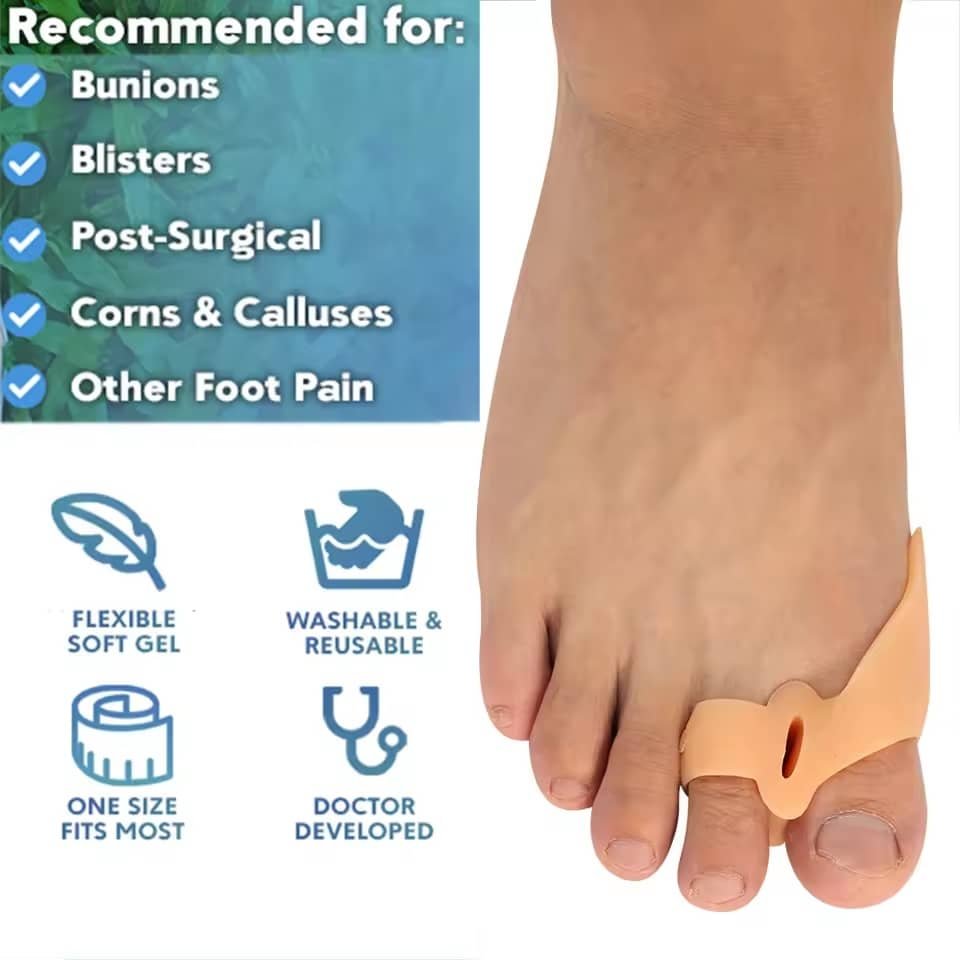
This is where a specific category of devices becomes invaluable. Toe separators for bunions correction are designed to address the misalignment directly. They come in various materials and designs, each with a slightly different purpose.
Silicone toe separators for bunions and gel toe separators for bunions are among the most popular. Made from soft, flexible medical-grade materials, they are designed to be worn inside shoes. Their primary function is to gently realign the toes by creating a barrier between the big toe and the second toe. This helps to:
Reduce friction and pressure that causes pain and corns.
Gently train the toe back toward a more neutral position over time with consistent use.
Improve alignment during movement, which can positively affect your gait.
For a more specific issue often associated with bunions, big toe separators for overlapping toes are essential. An overlapping toe, where the second toe rides on top of the big toe, is a common complication. A big toe separator placed between the first and second toes can help correct this painful overlap, providing immediate relief and preventing skin breakdown.
It’s important to note that many products are marketed with a specific focus, such as toe separators for bunions women, as women are statistically far more likely to develop bunions due to footwear choices. However, the function and design are generally the same regardless of gender marketing.
3. Bunion Splints and Night Splints
While toe separators are for daytime use, night splints are a more rigid orthotic device worn while sleeping. They hold the big toe in a straighter position for an extended period. The theory is that this prolonged, gentle stretch can help loosen the soft tissues around the joint and counteract the pulling forces that occur during the day. They are not a standalone cure but can be a useful adjunct therapy for improving flexibility and alignment.
4. Orthotics (Custom or Over-the-Counter)
Bunions are often linked to faulty foot mechanics, like overpronation (flat feet). Custom-made orthotic insoles, prescribed by a podiatrist, can correct these underlying issues. By properly supporting the arch and redistributing pressure across the entire foot, orthotics can reduce the excessive force on the big toe joint during walking, thereby slowing the bunion’s progression. Over-the-counter arch supports can also provide relief for those with milder cases.
5. Pain Management and Anti-Inflammatories
When the bunion becomes inflamed and painful (a state called bursitis), simple measures can provide relief:
Ice: Applying ice packs to the red, swollen area for 15-20 minutes can reduce inflammation and numb the pain.
NSAIDs: Over-the-counter nonsteroidal anti-inflammatory drugs like ibuprofen can help manage pain and swelling during flare-ups.
Padding: Moleskin or gel-filled pads placed over the bunion can protect it from chafing and pressure inside your shoe.
6. Physical Therapy and Exercises
Specific exercises can strengthen the intrinsic muscles of the foot and improve the range of motion in the big toe joint. This creates a more stable foot environment and can help combat the deforming forces.
Toe Spreading: Practice spreading all your toes apart as wide as you can and holding for a few seconds.
Big Toe Pulls: Gently pull your big toe into proper alignment with your hand and hold for 10 seconds.
Marble Pickups: Use your toes to pick up marbles from the floor and drop them into a cup.
Towel Scrunches: Place a towel flat on the floor and use your toes to scrunch it toward you.
When is Surgery the Only Option?
Despite the best conservative efforts, there are scenarios where surgery becomes the recommended course of action:
Severe, unremitting pain that interferes with daily activities and does not respond to conservative care.
Severe deformity with a dramatic overlapping toe, such that finding any comfortable footwear becomes impossible.
Chronic inflammation and swelling that doesn’t improve with rest or medication.
Stiffness and a significant decrease in the big toe’s flexibility.
Conclusion: A Realistic and Empowered Approach
So, can you fix a bunion without surgery? You cannot make the bony protrusion vanish without an osteotomy (surgical bone cut). However, you can absolutely “fix” the problem it causes in your life. By embracing a comprehensive strategy—prioritizing wide shoes, consistently using tools like silicone toe separators for bunions or big toe separators for overlapping toes, incorporating exercises, and managing inflammation—you can achieve a state of comfort and function that makes the prospect of surgery irrelevant.
The power to manage a bunion conservatively lies in commitment and consistency. It is a lifelong practice of mindful foot care. Consulting a podiatrist or foot specialist is essential to get a proper diagnosis and a personalized plan. They can guide you on the best type of toe separators for bunions correction, the need for orthotics, and the most effective exercises for your specific situation. With the right non-surgical approach, you can keep your feet happy, healthy, and pain-free for years to come.