
Why Can’t I Feel My EMS Foot Massager?

You’ve just unboxed your new EMS foot massager, eagerly set it up, placed your feet on the EMS foot massager pad, and turned it on. You expect a distinct, tingling sensation, a rhythmic contraction, something. But instead, you feel… nothing. Or at most, a faint, almost imperceptible buzz. A wave of disappointment and confusion hits. Is the device broken? Did you get a faulty unit? Before you rush to contact customer support or return the product, it’s crucial to understand that the lack of sensation, while frustrating, is a common experience with a multitude of potential causes. Furthermore, for a specific group of users, this inability to feel the stimulation is not a technical glitch but a critical red flag demanding immediate medical attention.
This article will delve into the technical, physiological, and human factors that explain why you might not feel your EMS device, exploring everything from simple user error to serious health conditions.
Part 1: Technical and User-Based Reasons
Often, the issue lies not with your body but with the device itself or how you’re using it. EMS technology relies on a clear circuit of conductivity between the machine and your muscles. Any break in this circuit will result in a weak or absent sensation.
1. Poor Skin Contact and Conductivity:
This is the most common reason for a weak sensation. An EMS foot massager pad requires excellent conductivity to transmit its electrical impulses effectively.
Dry Skin: The outermost layer of skin, the stratum corneum, is a poor conductor of electricity when dry. Calloused, rough, or simply dry feet will significantly impede the signal.
Solution: Thoroughly moisten the electrode pads (if they are separate) or your feet with water or a specialized conductive gel. Do not use aloe vera or standard lotions, as they are not designed for this purpose and can further insulate the skin.
2. Incorrect Electrode Placement:
The electrodes on an EMS foot massager are placed strategically to target specific muscle groups, like the arches or the area below the ankles.
Misalignment: If your feet are not positioned correctly, the electrodes may not be making contact with the optimal neuromuscular points. The impulses might be hitting mostly bone or fatty tissue instead of muscle motor points, drastically reducing the perceived sensation and effectiveness.
Solution: Consult the user manual for precise foot placement diagrams. Adjust your feet slightly up, down, or sideways to see if the sensation improves.
3. Device Settings and Intensity:
It sounds simple, but it’s easily overlooked.
Low Intensity: You may have simply started at too low an intensity level. EMS devices have a wide range of settings, and the lowest ones are often designed for first-time users or very sensitive individuals, producing a barely noticeable pulse.
Solution: Gradually increase the intensity level using the remote control or device buttons. Do this slowly and carefully.
4. Clothing as a Barrier:
Are you wearing socks? Even thin socks can act as a formidable barrier, preventing the electrical impulses from reaching your skin. Always ensure your bare, clean, and slightly damp feet are making direct contact with the electrodes.
5. Device-Specific Issues:
Low Battery: A depleted battery cannot deliver a consistent, strong electrical pulse. The output will be weak and erratic.
Faulty Unit or Electrodes: Unfortunately, you may have a defective product. Worn-out, damaged, or poorly manufactured electrodes will not transmit the current properly. If you’ve tried all the above steps on multiple intensity programs with no result, the device itself may be the issue.
Part 2: Physiological and Biological Factors
If you’ve eliminated all technical causes and others can feel the massager but you still cannot, the reason may lie within your own body.
1. Individual Pain and Sensation Threshold:
Every person has a unique neurological threshold for perceiving sensory stimuli. What one person describes as a “strong tingling,” another might perceive as “mild” or even “nothing.” Your personal baseline for detecting transcutaneous electrical nerve stimulation (TENS) or EMS may simply be higher than average. This is a normal variation in human biology.
2. Peripheral Neuropathy: The Critical Red Flag
This is the most serious potential reason for a lack of sensation and warrants its own detailed discussion. Peripheral neuropathy is a condition resulting from damage to the peripheral nerves, often causing numbness, tingling, and pain, most commonly in the hands and feet.
The Diabetes Connection: The most common cause of peripheral neuropathy is diabetes. Consistently high blood sugar levels can injure nerves throughout the body, but the longest nerves—those running to the feet—are the most vulnerable. This leads to a progressive loss of sensation.
Why This is a Warning Sign: If you cannot feel the electrical impulses of an EMS foot massager while others can, it could be a primary symptom of undiagnosed neuropathy. Your nerves may be so damaged that they are no longer transmitting sensory signals to your brain effectively. This is not a reason to increase the intensity but to stop immediately and consult a doctor.
The Extreme Danger: Using an EMS device with significant neuropathy is profoundly dangerous. Without the crucial pain feedback mechanism, you could turn the intensity high enough to cause severe muscle strains, tendon damage, or even skin burns at the electrode sites without feeling a thing. You would be causing micro-trauma to an area that likely also suffers from poor circulation, dramatically increasing the risk of a non-healing wound and infection.
3. Other Medical Conditions:
Besides diabetes, other conditions can cause neuropathy or reduced sensation, including:
Vitamin B deficiencies (especially B12)
Thyroid problems
Autoimmune diseases like rheumatoid arthritis or lupus
Chemotherapy treatments
Kidney or liver disease
Alcohol use disorder
Part 3: The Nature of EMS Technology Itself
Sometimes, the expectation of what an EMS device should feel like is based on a misunderstanding of the technology.
EMS vs. TENS: It’s important to distinguish EMS from TENS (Transcutaneous Electrical Nerve Stimulation). A TENS unit is designed primarily to overwhelm pain signals with a high-frequency, surface-level tingling sensation. It’s meant to be felt strongly on the skin. An EMS device, however, is designed to penetrate deeper to stimulate motor nerves, causing muscles to contract. The sensation is less of a surface tingle and more of an internal pulling or tightening feeling as your muscles contract and relax involuntarily. If you’re expecting a sharp TENS-like tingle, you might misinterpret the deeper, throbbing contraction of EMS as “not working.”
What To Do: A Step-by-Step Guide
Troubleshoot the Device: Check the battery, ensure perfect skin contact (use water/gel), verify correct placement, and gradually increase the intensity.
Test on Another Person: This is the most effective way to isolate the problem. If another person feels a strong sensation at a low-to-medium setting, the device is likely functioning correctly, pointing to a physiological cause.
Listen to Your Body (or Lack Thereof): If the device works on others but not on you, do not keep cranking up the intensity to try and feel something. This is a potential sign of a medical issue.
Consult a Healthcare Professional: If you suspect you have reduced sensation in your feet for any reason, it is imperative to schedule an appointment with your doctor or a podiatrist. They can perform simple painless tests (like a monofilament test) to check for neuropathy.
Prioritize Safety: Understand that an EMS massage mat or foot massager is a powerful electronic device, not a simple toy. Its use is contraindicated for individuals with neuropathy, heart conditions, or epilepsy. Your safety is infinitely more important than experiencing a massage.
Conclusion: A Signal Worth Heeding
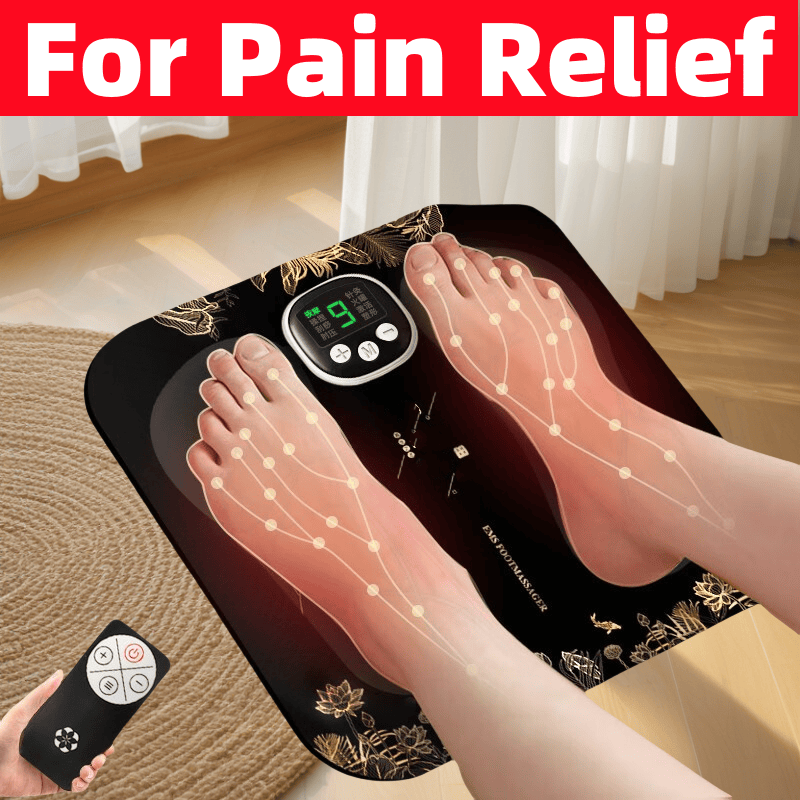
EMS Foot Massager Pad Price, Muscle Stimulator Mat
The question, “Why can’t I feel my EMS foot massager?” has a spectrum of answers, ranging from the mundane to the medically critical. While often a simple fix involving better conductivity or adjusted settings, the persistent absence of sensation—especially when confirmed to be a device issue—should be treated as a valuable warning from your body. It could be the first tangible sign of peripheral neuropathy, a condition where early diagnosis and management are crucial for preventing serious complications, including foot ulcers and amputations.
Therefore, this experience shouldn’t end with a returned product but should potentially begin a journey toward a important health consultation. The goal is not to simply feel a tingling in your feet, but to ensure you have the capacity to feel it at all.
Related topics:
Beyond the Bonus: Cultivating Culture with Thoughtful Corporate Gifts for Employees
https://timebusinessnews.com/beyond-the-paycheck-unpacking-the-anatomy-of-a-truly-meaningful-employee-reward/
How to Personalize Your Tungsten Ring: Inlays, Finishes, and Designs